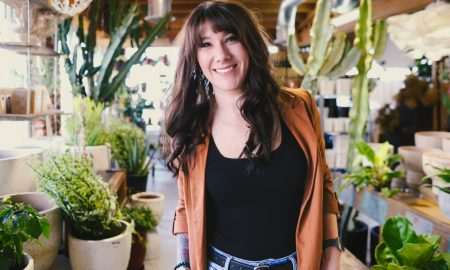


Today we’d like to introduce you to Julia Vitarello.
Julia, before we jump into specific questions about the organization, why don’t you give us some details about you and your story.
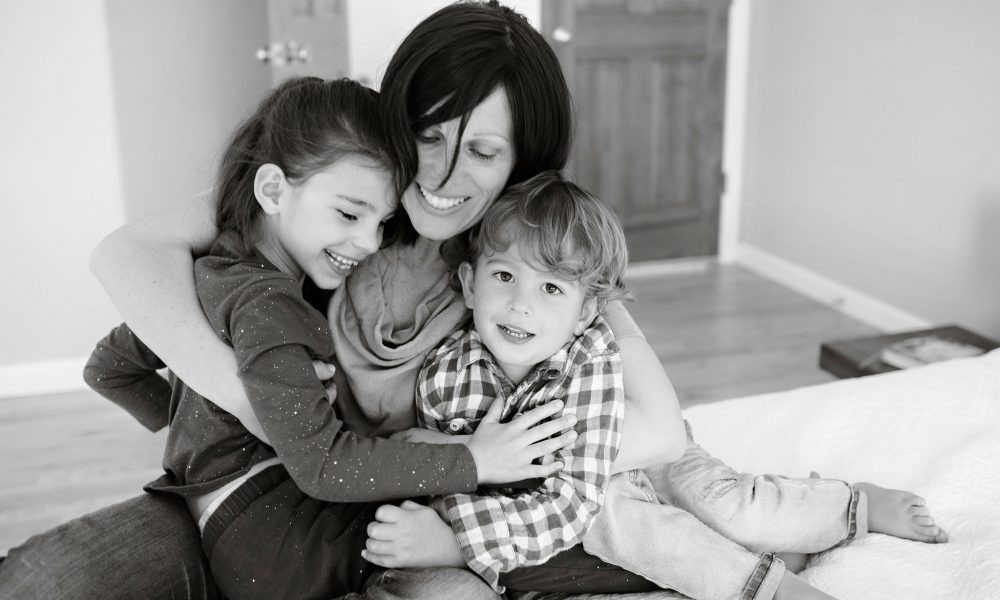
In December 2016, after over one hundred visits to doctors and therapists, my previously healthy and active six-year-old daughter Mila was given a death sentence. She was diagnosed with Batten disease, a devastating rare genetic condition with no cure. Mila had been incredibly outgoing and active, singing the ABCs, hiking for hours on end and skiing at just two years old. Within just a few months from her diagnosis, Mila lost her vision completely and said “mommy” for the last time. She was quickly losing her ability to walk and swallow and had a gtube placed to help with fluids and eventually nutrition. She became ridden with seizures. Despite all of this, Mila’s smile and laughter continued to fill our home. I thought to myself, “If Mila can fight, so can I”. I decided to give it everything I had and immediately started a rare disease non-profit and spent the next year pulling from everything in me to raise millions of dollars and pull together the best scientists to work on a treatment for Mila. At the time, almost nothing was known about Mila’s rare type of the disease and no child had ever lived with Batten disease. But after one year of fighting, the stars aligned and in January 2018, we moved to Boston and Mila began an entirely new drug customized to her – called milasen. She became the first person in the world to receive a drug tailored to just one person and was given an unprecedented second chance at life.
Her drug has shown great promise, initially stabilizing her disease and even showing improvements. However, Mila had lost of lot before beginning her treatment and many of the dominoes of genetic disease had already fallen. I don’t know what Mila’s future holds, but I do know that Mila’s story is now opening up an entirely new field of truly personalized medicines and offering great hope to children across thousands of rare conditions who would otherwise have no chance.
Today, I am dedicated to taking care of Mila and giving my children as much love as possible while at the same time continuing on my mission to turn Mila’s incredible fight and the second chance she was given into new hope for children across many rare diseases. I now realize that Mila’s life has a greater purpose than I had ever imagined when she was born. She isn’t just our sunshine. She is a little ray of light, a little spark, for everyone. Our hope is that her spark will ignite others, and one day soon there will be a bright light where there was once just darkness.
Has it been a smooth road?
There was nothing smooth about the road we have just travelled. Mila was diagnosed with a genetic disease that was 100% fatal and scientists believed that a treatment was at least ten years away. I was told I would watch my daughter say her last word, take her last step, and look through her eyes for the last time before being dying around her tenth birthday. I had to pull from the most positive hopeful part of my soul and close my eyes and start fighting. Every day, I wanted to lay on my closet floor and cry. As the pain ate through my body, I erased the images of Mila’s future. I wanted to avoid interaction with my family and friends. They couldn’t relate, and I couldn’t bear to see their children growing up and exploring life like my Mila had loved to do. But I saw that Mila was still smiling and laughing despite losing so much, and I realized I would put everything I had in me to fight for her. I would be her voice – the voice that seemed to say, “I’m still the Mila that finds the beauty in even the simplest moments, even when I can’t see what’s around me. I’m not giving in yet!”. I wasn’t a scientist, doctor or fundraiser. But I was living a life with my daughter and son that others were drawn to. Our story was one of pain, but also of joy and hope. And I my only chance at helping Mila was to climb out of my closet and tell her story to anyone and everyone that would listen.
What ended up being the most difficult struggle was balancing being a mother to my children and not losing the precious moments with Mila that I could never get back, with raising the incredibly daunting millions of dollars needed to fund the science, and finding a scientist who wanted to champion our fight toward a treatment. I switched hats many times throughout the day and night. When I played with my kids, I felt like the clock was ticking and I was losing time in my fight for Mila. But when I was working to raise the money and talk to scientists, I could see Mila losing her abilities that I might not ever experience again.
We’d love to hear more about the organization.
I founded and am currently CEO of Mila’s Miracle Foundation, whose mission is to find and fund paths to a cure for Batten disease and similar neurodegenerative conditions. I shape the voice of our foundation by speaking and writing. I present at scientific conferences and meetings, at academic medical institutions like Stanford’s pediatric grand rounds, to students and biotech’s, to government agencies like the FDA and NIH, and at other rare disease meetings. I write a blog on my emotional journey which I post on my foundation’s website and often repost on other sites, and have contributed chapters to medical school textbooks. I believe that my voice has offered a healthy balance of both the incredible hope that advances in genetics offer today together with the reality that diseases like Batten are so complex and we’re still in the early days of learning about treatments.
I’m so proud of Mila’s Miracle Foundation for making milasen happen for Mila and now for the hope of an entirely new treatment path that it has opened up. Our fight was for Mila, but it was always for much more. I feel an enormous obligation to turn everything that we’ve done for Mila into a way of helping the millions of families like mine that cry in desperation on their closet floors. Because of our fight against all odds, and because of the work we started and funded for a treatment that we were told was impossible, we are now helping more than one disease, but a treatment platform that could cut across hundreds or thousands of rare diseases where no treatment or cure exists.
Is our city a good place to do what you do?
Right now, there aren’t many scientists and doctors focusing on rare disease treatments. When I started my fight, I ended up finding champions of my fight for Mila in Boston and North Carolina. Children’s Hospital Colorado in Denver was very helpful in diagnosing Mila after a two year odyssey. However, there were no scientists or facilities in Colorado to collaborate with in my fight. Now, my foundation is working closely with Children’s Colorado to allow for more children with Batten and similar degenerative diseases to get clinical care as well as open up the possibility of treatment options.
Contact Info:
- Website: milasmiracle.org
- Phone: (202) 821-9137
- Email: julia@milasmiracle.org
- Instagram: http://instagram.com/stopbatten
- Facebook: https://www.facebook.com/stopbatten
- Twitter: https://twitter.com/stopbatten


 Image Credit:
Jewel Afflerbaugh, Julia Vitarello, Boston Children Hospital
Suggest a story: VoyageDenver is built on recommendations from the community; it’s how we uncover hidden gems, so if you or someone you know deserves recognition please let us know here.
Popular
-

The Trailblazers: Rewriting the Narrative
-

Celebrating the Spotlight: Kaytee Shashore Turns Milestones Into Momentum
-
Humanity in the Machine: Alexander Raye Pimentel’s Cyborg Recall Questions the Cost of a Data‑Driven World
-

Raemi Anderson on Courage, Caution, and Answering the Call of the Landscape
-

Hidden Gems: Local Businesses & Creatives You Should Know