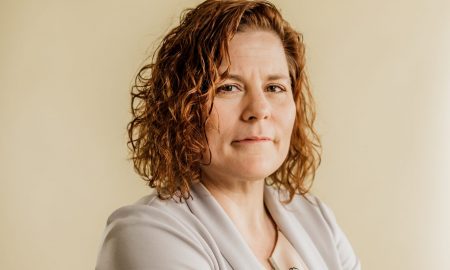


Today we’d like to introduce you to Kelly Dore.
Thanks for sharing your story with us Kelly. So, let’s start at the beginning and we can move on from there.
I am the Executive Director of the National Human Trafficking Survivor Coalition, formed with other professional survivor leaders in 2016, to help get emergency funding to survivors, advocate, educate and raise awareness to the degree of Human Sex and Labor trafficking across Nation and serve as a policy/legislative consultant to Congressional members and State Legislators. As a subject matter expert in policy, legislation and CSE, my public policy advising extends to United Nations, the Vatican, State and Federal entities and I have written, testified and helped to advise many pieces of legislation around the US. I am also an Ambassador for Shared Hope International and have authored a familial trafficking Identification guide for medical professionals and educators.
As an elected County Commissioner, I have worked with both the Obama and Trump administrations and elected officials to help them understand the implications of familial Human Trafficking on a National Level. I was a member of NACO’s Health and Human Service Committee and served as an advisor on Human Trafficking Issues within the nation’s counties. I am a survivor of familial trafficking from ages 1-14 and testified against her trafficker when she was 15. The state of Colorado brought 27 counts against him, to which he pled guilty to 19, and was sentenced to two months in prison. My passion is to help strengthen laws for child survivors so they receive appropriate justice so they can heal.
Currently, I am transitioning over into a new executive director role for an organization called Katalyst, which serves to promote service in humanity, but continue to have NHTSC on the emergency funding side, run. I have sat on the Governor’s Council as an Advisor for three States and served as a member of the Denver Anti-Trafficking Alliance, Global Survivor Alliance and Delta 8.7 for United Nations and advised on International issues such as Voluntourism and Orphanage Trafficking for the State Department. I am published in the National Academies of Science, Engineering and Medicine, Titled, Estimating the Prevalence of Human Trafficking in the United States and is also a Tedx Speaker and her video is titled “The Intersection of Vulnerability and Trauma.”
Overall, has it been relatively smooth? If not, what were some of the struggles along the way?
Definitely not. The greatest struggle within the anti-trafficking movement is the collaboration and competition for funding, which causes many organizations to want to be a “one-stop-shop” for all things trafficking because it makes donors feel they are doing even when it is harmful to survivors in the long run. Another challenge is getting organizations to recognize that we do not “rescue” people, and changing their language to be more appropriate and trauma-informed. When we say we “rescue” someone, we are removing the responsibility of their healing and placing it in our hands, this removes the power of healing from the victim and creates another dependency which is not sustainable in the long run.
As a survivor, you have to constantly prove your worth and many times. You are brought to the table by organizations and government entities so they can merely say they have a “survivor” there, this is tokenizing and disingenuous to the wisdom and lived experience many survivors have. It is difficult at times as a survivor to not be recognized for your skillset, education, knowledge and contributions to the anti-trafficking movement, when you are merely labeled as a survivor, I believe this causes many issues in collaborative relationships across the board within this movement.
One of the biggest issues many survivors deal with, even when they have a documented case, is whether or not they are telling the truth, I have found that a lot of this stems from families and/or allies not being able to recognize or accept what they did not do to support the survivor, or that they did not know how to see the abuse that was happening. Another struggle is the division amongst the pro-sex work movement and the abolitionist side nationally, which causes many laws and legislation to support some, but not all. Human Trafficking is a vast sea of many abuses and they all cannot be lumped into one, sometimes when we support thought in one area as a “free choice,” it takes away the rights of another group. We must work to promote the dignity of the person as a whole and that means supporting measures that promote their freedom.
Please tell us about National Human Trafficking Survivor Coalition.
I started the National Human Trafficking Survivor Coalition, with other professional survivor leaders in 2016, to help get emergency funding to survivors, advocate, educate and raise awareness to the degree of Human Sex and Labor trafficking across Nation and serve as a policy/legislative consultant to Congressional members and State Legislators. I found that when we create laws that are not applicable to the population, they intend to protect/serve, then they are nothing more than a piece of paper. I am one of the only survivor leaders in the nation who has help public office and has a unique understanding of the inner workings of government, how to lobby and build relationships to support survivors across the board.
When I was 15 and my biological father was only sentenced to two months in jail for the crimes he committed on me for nearly my entire life, I was devastated and wanted to find a way to help better educate the judicial system and help strengthen laws, so no child had to endure what I did.
I am proud of being known as a subject matter expert in policy, legislation and CSE. My public policy advising extends to United Nations, the Vatican, State and Federal entities and I’ve written, testified and helped to advise many pieces of legislation around the US and to author a familial trafficking Identification guide for medical professionals and educators.
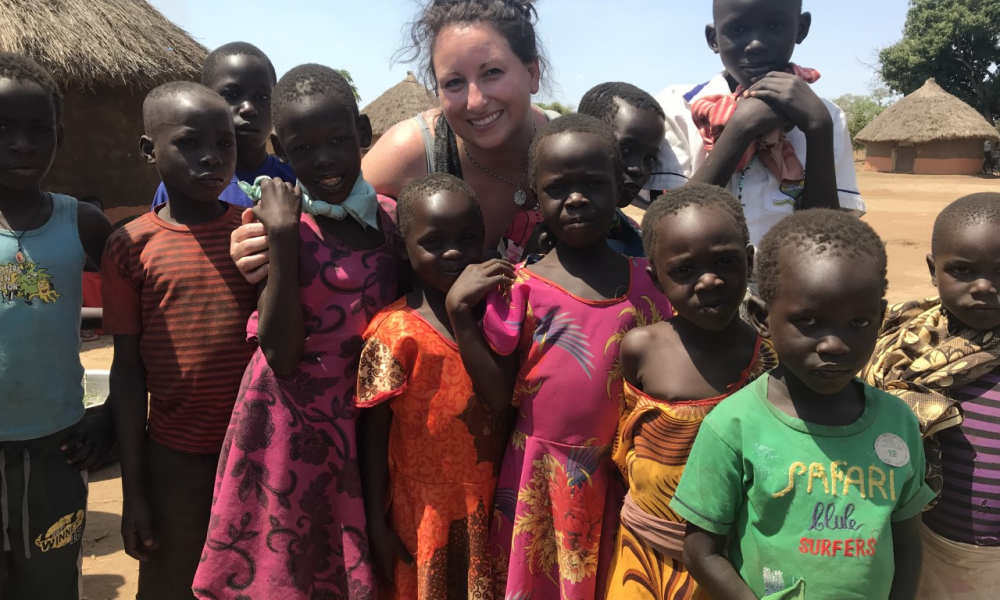
While, that is important, I am most proud of the collaborations I have facilitated amongst survivors and helped to gain recognition as someone who not only supports survivors, but also many other females ran non-profits who help in promoting the dignity of all lives across the board. I have done all of this free of cost, meaning I do not take a salary, as all of the speaking engagements I take and funds raised goes 100% back to survivors and vulnerable populations. I have been able to collaborate with organizations in several countries and am proud of the education and medical work we are doing in Uganda and Sierra Leone. In addition to this, my husband and I believe in service and supporting the educational needs of children in the US and globally- education is everything and we personally sponsor 67 children and 11 Women in 5 countries to give them an education to better their lives. Poverty is the root cause of all vulnerability and we recognize that while we cannot help everyone, we can make a huge impact on those through faith in their abilities and loving them where they are.
Any shoutouts? Who else deserves credit in this story – who has played a meaningful role?
I have a strong team of role models and survivor sisters and brothers who all deserve credit. I would not be where I am today without the support of my husband, Tim and four children, who, at times, sacrifice for my job and commitment to serving others. Among some of the most incredible survivor leaders, I would have to say, Megan Lundstrom of The Avery Center, formerly known as Free Our Girls, Autumn Burris of Survivors4Solutions, Brandi Bergren of Beauty for Ashes Uganda, Shandra Woworuntu of Mentari, Johanna Spille of Covered and Jessa Crisp of BridgeHope, to mention a few. There have been many other incredible friends who have walked with me in this endeavor, I have found that it is best to have friend groups inside your movement and outside it, just women you trust, can live your faith with and also be your authentic self. On my journey, I have recognized that people will want to associate with you because they think you can bring something to them, those are never the people you want to align with, choose those who love you where you are, who are always honest with you and keep friends who pray for you close.
Contact Info:
- Website: www.NHTSC.org
- Phone: 3035222955
- Email: Director@NHTSC.org
- Other: National Human Trafficking Surivor Coalition


Image Credit:
B&W photo- Tanya Martineau
Suggest a story: VoyageDenver is built on recommendations from the community; it’s how we uncover hidden gems, so if you or someone you know deserves recognition please let us know here.