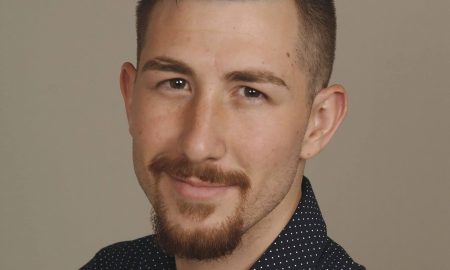


Today we’d like to introduce you to Adam Potter.
Adam, let’s start with your story. We’d love to hear how you got started and how the journey has been so far.
I grew up an only child of a single mother in the Washington DC metro area. My mother worked long hours and came home late in the evenings. I lacked social skills and had emotional problems that made it difficult to make and maintain friendships, so I spent a good deal of time alone. Long story short, I had a number of problems that I did not get help with. It wasn’t until after being expelled from school and then hospitalized for a mental illness that it was clear that I needed to do something drastic to have a chance at something like a normal adulthood.
I was told that I should apply for disability and that I would need to take medications for the rest of my life. For reasons that I am still not sure of, I did not accept that view and instead began a journey that led to a complete and so far permanent alleviation of psychiatric symptoms (although modern psychiatry would likely regard my recovery as evidence that I was misdiagnosed). I began this path by reading every psychology book I could find. I studied Freud, Jung, Pearls, Reich, Piaget, Vygotsky, Buddhism, Taoism, Shamanism, Tantra, Chi Kung, Beck, Ayurveda, Grof, and other theorists and philosophies to help me to better understand myself, the human condition, and mental health. Eventually, my inquiry led me toward moving to Colorado to study Buddhist meditation at a retreat center in Red Feather Lakes. Later I attended Naropa University’s Transpersonal Psychology Master’s program. This program actually placed a greater emphasis on Attachment Theory which was pivotal in my understanding of my own challenges and those that faced most people suffering from mental illness.
Before graduating, I made the decision to go to medical school to become a psychiatrist and completed the prerequisite courses for admission. Although I ultimately decided not to follow that path, the grounding in science that coursework gave me prepared my mind for the study of Applied Behavior Analysis (ABA). ABA was unique for me in that it represented what continues to appear to me as the most pure application of science to human problems, problems that other disciplines frequently spoke of and treated in sometimes vague and abstract ways. I witnessed changes in clients receiving ABA that I had not known to be possible until then.
The first group of people I worked with as a Board Certified Behavior Analyst were adults with developmental disabilities and moderate to severe behavior problems. These adults more often than not also had mental illnesses that contributed to the issues they were facing. Finding that in many cases, the application of pure ABA interventions was insufficient to provide the relief the clients and their caregivers needed, I borrowed concepts and strategies from other fields of psychology, especially Attachment Theory and trauma, to build behavioral interventions that were often dramatically more effective. One class of intervention, relaxation training, was pivotal in helping clients with a history of trauma.
However, I found that my techniques for teaching this skill were not effective with clients with more severe cognitive challenges. I researched and found a method that would help me to teach relaxation to people that weren’t able to learn through modeling and verbal instruction: biofeedback. My employer at the time who had seen the effectiveness of my work with higher functioning clients purchased the equipment for me and I put it to use. I found that biofeedback helped to teach skills that ameliorated the symptoms of many of my clients that were otherwise not successful.
While continuing to develop as a biofeedback practitioner, I took a job in Maine as a Behavior Consultant in public schools. In this work, I was asked to consult and develop programming for children, many of which did not have cognitive disabilities. Most of the children I worked with had experienced trauma, abandonment, and many had been exposed to alcohol or other toxins while in the womb. It was here that I found my behavioral education to be the most lacking. I felt confident that I understood the problems, but lacked the behavioral language to convey solutions. I developed what might be considered an attachment-informed behavioral framework and approach to allow teachers and paraeducators to implement procedures that would address what I considered to be many of the children’s core deficit: the ability to trust adults and make use of them to regulate emotions that were driving them to act out and interfered with their ability to participate in education.
I provided consultation and workshops to teachers, therapists, and even other BCBA’s and was surprised by how well I was received. So often a teacher or therapist would cry as I explained the approach, telling me how relieved they were to hear something that made sense and fit the problems they were bringing to me and that was not a repetition of ineffective strategies that had previously been presented to them.
During this time, I had begun a private biofeedback practice. Some of the children that I saw in my office I was also consulting for in their schools. In these cases, I was able to work on two fronts: I could use biofeedback to assist with physiological barriers to success and then follow up with behavioral interventions to teach the children better ways of coping with the school environment. I observed that biofeedback often made previously ineffective behavioral interventions effective. This seemed like a huge breakthrough.
With these experiences and observations under my belt, I moved back to Colorado to start Lighthouse Neurofeedback and Behavior Analysis. The challenge became how do I upscale this approach and maintain the level of success I had become accustomed to. We developed a training program to teach psychophysiological interventions to behavior therapists along with a conceptual framework that integrates Behaviorism, Attachment Theory, and psychophysiology. Applied Behavior Analysis is outstanding in that it employs methods of training and implementation of procedures across groups of people supporting a child. Attachment Theory speaks directly to the core processes humans use to regulate their emotions and relationships. Psychophysiology provides an objective, detailed, and nuanced account for the processes happening beneath the skin that are often essential to a child’s success in regulating their behavior and achieving happiness in life.
Although I am proud of the progress we have made, there is a much longer road ahead than behind. The field of Behavior Analysis has been historically quite close-minded with regard to other theories and interventions. The world of Biofeedback, being largely populated with practitioners from the social sciences, has only limited support for the scientific method, especially as it relates to the application of procedures. I have had to hire outside consultants to develop a useful way to consistently collect and graph data on therapeutic interventions as it appears the demand for tools in that area is not sufficient for another company to develop them. Combining the expertise and services is often clumsy and not funded. For the most part, these challenges have been or will soon be overcome.
Do you look back particularly fondly on any memories from childhood?
My best memories from childhood were from time I spent with my neighbor, who was my Karate teacher, Jim Morgan. I was so hungry for a male role model that I memorized everything that he said. He taught me so many things and I am eternally grateful.
Contact Info:
- Address: 1233 Sherman Dr.
Longmont, CO 80501 - Website: www.lighthousetherapeutics.com
- Phone: 720-772-7334
- Email: adam@lighthousenba.com


Suggest a story: VoyageDenver is built on recommendations from the community; it’s how we uncover hidden gems, so if you or someone you know deserves recognition please let us know here.
Popular
-

The Trailblazers: Rewriting the Narrative
-

Celebrating the Spotlight: Kaytee Shashore Turns Milestones Into Momentum
-

Humanity in the Machine: Alexander Raye Pimentel’s Cyborg Recall Questions the Cost of a Data‑Driven World
-

Raemi Anderson on Courage, Caution, and Answering the Call of the Landscape
-

Hidden Gems: Local Businesses & Creatives You Should Know