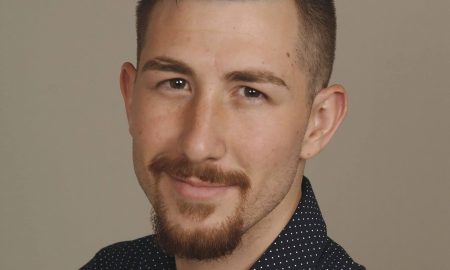


Today we’d like to introduce you to James Persichetti.
Thanks for sharing your story with us James. So, let’s start at the beginning and we can move on from there.
I finished my first full novel when I was in fourth grade. It was terrible and I haven’t dug it out in years. But ever since I could write, I was telling stories and dreaming about being published. My friends and siblings made fun of me for bringing my notebook on every car ride and into every restaurant. Even writing in the movie theaters before the lights dimmed.
After graduating with an English degree, I landed a job at Nelson Literary Agency. It took a bit of networking, luck, and having the right skills for the job. Kristin needed someone to handle foreign translation rights in Asia, and I had spent a semester in Japan. I never thought Japanese would help me get a job in publishing, but it got my foot in the door.
Nelson Agency is when I really learned how the publishing industry works and how to write a marketable book. I read queries, balanced royalty accounts, went to the Frankfurt Book Fair to sell foreign rights, and spoke at writing conferences. I wrote every morning and lunch break, evaluated hundreds of submissions throughout the day, read on the bus, and edited my friend’s books in the evenings. My whole day from dawn to dusk was books.
Eventually, it became too much. I needed to sit down and seriously think about how I was spending my energy, and if that was advancing my goals. I’m interested in the story side of publishing, not the business side. I wanted to write and edit books. It took months of planning, the incredible support of my boyfriend, and a leap of faith, but I decided to move to freelance work.
I started my own editing company so I could help authors get published and give me more freedom for my own writing. When starting freelance, finding enough work is always a concern. But with three years of experience at an agency, Kristin’s helpful support, and teaching classes at writing conferences, I was able to start off with a few clients already lined up.
Two years later, and my work is going strong. Every day is a balance between my writing and editing for my clients, but I’m now represented by an agent and have sold a book with some other projects on the way. As a writer, it’s an ideal situation. I can take on more editing projects when I have extra time, or I can clear a couple of weeks when I need to focus on my own writing.
Overall, has it been relatively smooth? If not, what were some of the struggles along the way?
Going freelance is not a smooth, paved road. I had to figure out a lot on my own. But I wouldn’t say there were any big obstacles that I couldn’t overcome. I always had the support of my boyfriend, friends, and family.
I had to be patient, slowly build my clientele, save money, find ways to be productive when there wasn’t any work coming in, and then find ways to manage my time when I had too much work. It’s been a journey of adapting and addressing each problem as they come.
The hardest part about being on your own is holding yourself accountable. Without a boss to keep you on track, it can be easy to lose focus, to wander around the house, and not sit down and get the work done. You live by deadlines and invoices instead of hours. Sometimes it means working nights and weekends, sometimes it means losing an entire day of work because you had to run errands. That self-discipline takes time to learn and effort to maintain. I’m still figuring it out, and even freelancers who have been at it for years still struggle with time management and focus.
Please tell us about Lost Hat Editorial.
My business focuses on editing manuscripts for traditional and self-published authors. I’m usually working with an author who’s still new to the game. They’re trying to figure out how to finish their first book, they’re looking for an agent, or they’re polishing a manuscript before publishing online. A few clients are already published and are working on their next projects.
There are three pillars to my job. The first and most obvious one is to help an author make their book the best it can be. I start with the big picture story edits (called developmental editing), then over a couple of rounds work down to the nitty-gritty (line edits).
But it surprises some of my clients when I ask what their overall publishing goals are. Beyond this one book we’re working on, I think it’s important to help my clients achieve their own version of success. Do they want to write full time, is their goal with this book to get an agent’s offer of representation, do they just want to get this book finished because it’s their passion project? So that’s the second pillar: coaching clients to help them achieve their goals.
Third, I think every editor is also a teacher. I want to help authors learn the craft and level up their skills. Even if this book doesn’t get published, I want them to walk away feeling like they have become a better author and their time and money was well spent. The next time they sit down to write, it will be that much better.
I also treat my writing as a business. I’ve just sold my first book, an Arthurian legends graphic novel called THE SAPLING’S CURSE, illustrated by L. Biehler and to be published by HMH. With hard work and a little luck, this will be my first step to making writing a major part of my career. But I think every writer needs to have another job to keep income steady and to give them something else to do with their day, and I intend to continue editing alongside writing.
If you had to go back in time and start over, would you have done anything differently?
This is a boring answer, but I would’ve set my prices differently. I started out wanting to give clear prices for each level of edits but quickly learned that not all books are created equally, and some take a lot more work than others. Now I give price quotes once I’ve seen a sample.
It’s difficult to really accept how much you’re worth. I started out charging far less than I should’ve for the services I was providing, and still struggle to charge more. But I know my work is worth more, and I’ve had countless friends and clients tell me this, so if I had to start over I wouldn’t sell myself short.
I’ve also learned a lot about the editing process, and the way I edit a book today is much more focused and professional than when I started out. But those are improvements that come with experience.
After school and on weekends, my brothers, friends, and I used to dress up in medieval cloaks and fight battles at the creek with foam swords. We’d spar for hours till it was too dark to see anymore. That was my exercise as a kid. I didn’t play sports, but we whacked each other with foam swords and ran around the creek playing capture the flag like we were fighting in Pelennor Fields to save Middle Earth. And our parents were happy we weren’t playing video games all day.
Contact Info:
- Website: https://www.LostHatEditorial.com/
- Email: james@losthateditorial.com


Suggest a story: VoyageDenver is built on recommendations from the community; it’s how we uncover hidden gems, so if you or someone you know deserves recognition please let us know here.
Popular
-

The Trailblazers: Rewriting the Narrative
-

Celebrating the Spotlight: Kaytee Shashore Turns Milestones Into Momentum
-

Humanity in the Machine: Alexander Raye Pimentel’s Cyborg Recall Questions the Cost of a Data‑Driven World
-

Raemi Anderson on Courage, Caution, and Answering the Call of the Landscape
-

Hidden Gems: Local Businesses & Creatives You Should Know