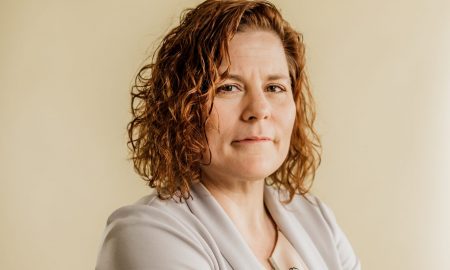



Today we’d like to introduce you to Megan Rogers.
Megan, can you briefly walk us through your story – how you started and how you got to where you are today.
My professional journey has very much mirrored my personal one. I started as a licensed clinical social worker over a decade ago. While in grad school, I was also exploring my own relationship to food and health in general, with the help of a holistic health coach. I have a long personal history of depression, and at that time, I had also been struggling with an eating disorder for quite a few years.
I realized that there were many contributing factors to my mental health — relationships, life and work satisfaction, past trauma — but at that time, not many mental health people were talking about the impact of food and lifestyle medicine and these were such game-changers for me. I wanted to help others with their food and overall health, so I received my health coach certification in 2011 and for a while, ran two businesses; one for therapy and one for health coaching.
The thing was: most of my clients with depression and anxiety were taking terrible care of themselves. And most of my health coaching clients were depressed and anxious! It no longer made sense to have a business for mental health and one for physical; they were intertwined, they were the same.
The most recent transformation, or addition, to my personal and professional work, was a brutally honest look at my alcohol consumption. I didn’t fit the idea of what most people would consider “alcoholic,” yet my relationship to drinking was pretty problematic. It was the only thing that didn’t fit into the life I wanted (green smoothies, yoga, running, hiking, meditation… and um, getting drunk?). So I got sober.
This is where all my passions connect: mental health, nutrition, and alcohol addiction. Because you know, all those clients who were depressed and anxious and eating like crap? They were also, like me, drinking way too much.
Has it been a smooth road?
Definitely not! First and foremost, it can be incredibly difficult to build a business, especially if you’ve not learned anything about starting one (which we did not, in social work grad school!). My health coaching program was heavy on the business side of things and I was also fortunate to find some peer support early in my Denver years. These both greatly helped my learning curve. I’ve also been humbled countless times along the way, made many mistakes, spent loads of hours networking (which I don’t fully love), and had to hire experts in areas about which I was clueless. That was a big lesson, not trying to do it all myself, and admit when my money is better spent than my time.
The other big struggle was, of course, life. My business was undoubtedly impacted by my own personal growing pains, but ultimately, these personal struggles-turned-lessons took my counseling and coaching skills to a whole new level. I am 100% a more compassionate, attuned therapist and coach because of my personal history, and I think my clients appreciate that I really do “get” them.
So let’s switch gears a bit and go into the Megan Rogers Integrative Psychotherapy + Coaching story. Tell us more about the business.
I support ambitious, brave, badass women in creating booze-less, joy-full lives and in harnessing the power of nutrition and lifestyle medicine to ease depression and anxiety. My ultimate goal for my clients is to find freedom from all the crappy things and to fill it with the life of their dreams.
I see clients in person at my Denver office, as well as remotely by phone and video. In addition to my psychotherapy practice, I run an individual coaching program working with Gray Area Drinkers; people who admit alcohol isn’t serving them, but don’t meet the criteria for more intensive addiction treatment. I also run local groups for women who identify as Gray Area Drinkers; they are equal parts of education, exploration, and connection, which I love.
In both therapy and coaching, my style is holistic, individualized, and evidence-based. I merge Western science with Eastern wisdom; incorporating neuroscience, spirituality, mindfulness, nutrition, yoga psychology and lifestyle medicine in order to support self-care, self-compassion, and self-acceptance. It’s a mouthful, but I believe a whole-person approach yields the best results.
How do you think the industry will change over the next decade?
Psychotherapy is interesting: practitioners do seem to be getting more specialized, when it comes to training and methods, but also more open-minded and inclusive of various approaches. It’s been so cool to be a part of the growing mindfulness movement and to see that incorporated more and more in the clinical world. I hope we see that with nutrition and lifestyle medicine as well. It’s a bit of a delicate dance, staying anti-diet-culture and also pro-recovery, in terms of the role food and movement play in supporting mental health; but I’m hopeful that these don’t have to be mutually exclusive.
Coaching is just totally exploding. You can hire a coach for almost anything these days; which is both cool and a bit scary. There hasn’t been much regulation for health coaches as a profession, so someone who attends a weekend workshop can call themselves a health coach, just as easily as I can, with years of professional education and training. Yikes! I think this will change in future years. We now have a National Board for Health and Wellness Coaching, which does set some standards and certifications. (Be sure to check out any health coaches’ credentials!)
Lastly, for both disciplines, and for health practitioners in general, I deeply hope that we start to consider the serious situation we’re in with women and alcohol. I’m on my soapbox about this quite a bit, but it’s a downright epidemic and women are in trouble. It’s time for health practitioners to take their clients’ and patients’ concerns seriously (rather than tell them they’re just being too hard on themselves, or deserve a glass of wine to unwind), and also to start asking the tough questions, remembering that people don’t have to have a “drinking problem” for drinking to be a problem.
Contact Info:
- Address: 422 Broadway, Denver, CO 80203
- Website: www.megan-rogers.com
- Phone: (720) 335-5163
- Email: contact@megan-rogers.com
- Facebook: www.facebook.com/mindbodywellnesswithmegan


Image Credit:
Britt Nemeth
Suggest a story: VoyageDenver is built on recommendations from the community; it’s how we uncover hidden gems, so if you or someone you know deserves recognition please let us know here.