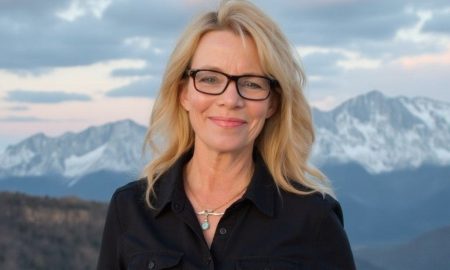


Today we’d like to introduce you to Patrick Conrey.
Patrick, can you briefly walk us through your story – how you started and how you got to where you are today.
It’s a long-winded story but after leaving the NAVY, I enrolled at CSU in Soil and Crop Sciences. I had been working on farms in the area during school until I finally got offered 14 acres with water near Wellington. I didn’t know what to do with the land. It’s a lot for vegetables and not much for grains. I settled on oilseed crops. There are two different types of safflower. One being high linoleic, commonly found in birdseed and the other being high-oleic which is good for high-heat cooking because of the molecular makeup. You must have high-oleic seed to get high-oleic oil. I called seed company after seed company trying to find the proper seed. No one had it except a farmer by the name of Bob Quinn, former CEO of Kamut International who lives in Montana. He just finished his book tour for his new book Grain by Grain and invited me to the farm to get the seed. I drove to MT in my little pickup truck and when I got there him and his general manager Drew Shanafelt, convinced me not to plant my 14 acres yet, and to expand their business in Colorado.
I now own The Oil Barn Colorado and we bring our safflower down in 55-gallon drums from MT. We are a young company and are getting our sales and distribution set up. Once we achieve an appropriate level of sales, we are going to build our own pressing facility here in Colorado and will contract and grow our own safflower here in the state! Customers can purchase a product online at www.theoilbarncolorado.com and we are also available at Jax Mercantile, Lucky’s Market and Alfalfa’s Market.
We are excited to continue our reach and work with new restaurants. High-oleic Safflower oil has a very high smoke point-higher than olive oil- and can be used to sear fish, make salad dressings and bake. I tell people, “it just hasn’t made its way into cookbooks like canola or vegetable oil but the application is the same.” We also cold-press our oil so that we preserve the vitamins and minerals.
My favorite part to tell is that safflower is a very appropriate crop for us to grow here in Colorado. Last August, while I was farming, our electricity bill to pump water on 1700 acres of corn and hemp was $19,000. Water is heavy to move but more importantly, we are running out of fresh water here in the state. Agriculture uses 89% of the freshwater in the state of Colorado. Urban planning is currently hogging the discussion regarding water use but the sheer numbers tell me that we need to focus on agriculture. The Oil Barn’s perspective is better to crop selection. There are many variables that go into this equation but for every 3 acres that we can take out of more heavily irrigated crops like corn, alfalfa or potatoes, we can save roughly one million gallons of freshwater. That’s 25 households’ annual consumption for every three acres!
Has it been a smooth road?
Thus far, it has been fairly smooth as I onboarded my company with an already successful and passionate one. We all share the same vision for healthier and more environmentally friendly food systems so the unified vision has, I think, smoothed out the transition.
So let’s switch gears a bit and go into The Oil Barn Colorado story. Tell us more about the business.
I have covered what we are known for and what we specialize in but I’m most proud of the high-quality product that we are getting to customers. The oil is truly beautiful and I believe it is a win-win-win for all involved. What sets us apart from others is our burning passion not to be just another food company. We are always looking for these win-win-win scenarios.
How do you think the industry will change over the next decade?
Well… that depends on how I want to frame the phrase “your industry”. I view my industry as agriculture in general. The oil business is reflective of larger trends in agriculture at large.
There is a lot of investment right now in biotechnologies, AI and software to improve growing efficiencies and resource consumption. I think investors and businesses are waking up to the impact that the production of food has on outland. This in turn, is being fueled by consumer awareness. I think the trend in organic food will continue to increase as it has over the last 25 years. Hopefully, the government will wake up to these changes and allocate more spending for research in organics. My work with the Colorado Food Systems Advisory Council has highlighted the importance of quality data to make decisions.
Pricing:
- $16 for 750ml
- $10 for 250ml
- $40 for a gallon (all prices are retail we also do wholesale and distributor pricing)
Contact Info:
- Address: 1617 White Water Ct. Berthoud, CO. 80513
- Website: www.theoilbarn.com (changing from theoilbarncolorado.com soon!)
- Phone: 9702176559
- Email: office@theoilbarncolorado.com
- Instagram: theoilbarncolorado
- Facebook: theoilbarncolorado


 Image Credit:
Jonathan Castner Photography
Suggest a story: VoyageDenver is built on recommendations from the community; it’s how we uncover hidden gems, so if you or someone you know deserves recognition please let us know here.
Popular
-

The Trailblazers: Rewriting the Narrative
-

Celebrating the Spotlight: Kaytee Shashore Turns Milestones Into Momentum
-

Humanity in the Machine: Alexander Raye Pimentel’s Cyborg Recall Questions the Cost of a Data‑Driven World
-

Raemi Anderson on Courage, Caution, and Answering the Call of the Landscape
-

Hidden Gems: Local Businesses & Creatives You Should Know