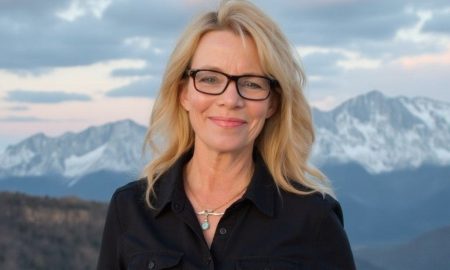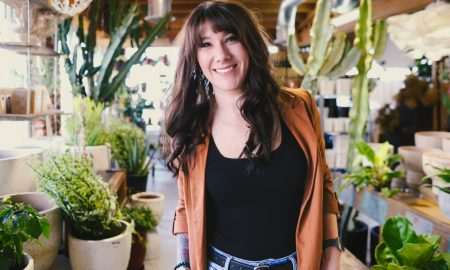


Today we’d like to introduce you to Alexandra Hostetter.
Thanks for sharing your story with us Alexandra. So, let’s start at the beginning and we can move on from there.
I scrawled the words “Don’t Litter!” on the back of a paper fan in black magic marker. My first action as an environmentalist. Age six.
I would stick the makeshift sign out of the window of my parents’ car as they drove me to school if I saw somebody ditch trash on the side of the road or toss a cigarette butt. It didn’t gain me any new friends, but at a young age, it taught me the power of standing up for the environment.
I grew up in rural Maryland, on the shores of the Chesapeake Bay. Vibrant rivers, expansive beaches, and colorful forests were the tapestry of my childhood. So, it was no surprise that the natural world quickly became where I felt the most when I understood the most, and what I loved the most.
I was not naïve however and knew that the pristine environment I saw around me was not the rule, but the exception. And unfortunately, year after year, during each drive to school while scouting for trash-offenders, I witnessed the increasing conversion of open land to building lots which proved my thinking.
So, after graduating from Elon University, my path was clear. I was determined to transform my passion into action and help further the environmental movement in whatever way I could. In my opinion, it was the most important issue of our generation, and there wasn’t a moment to lose.
Over the next decade, I aligned with environmental missions in both the United States and internationally, helping to raise millions of dollars, initiate strategic partnerships, and implement creative programming. I gained experience and honed my skills working for programs on a local scale – fighting for the protection of my hometown love – the Chesapeake Bay; on a global scale – managing international water contracts with the United States Agency for International Development; and on a regional scale – leading fundraising and partnership development efforts for Big Life Foundation, a wildlife conservation organization with operations based in East Africa.
And while I feel fortunate to have had such a diverse and personally-meaningful career thus far, I always keep my magic marker activism close to heart.
Scientists report that the sixth mass extinction in Earth’s history is underway. It sounds scary, and it is. Species on virtually every continent are disappearing, largely driven by human activity. Meaning, our everyday actions impact the world around us, in big and small ways, and are just as important as the 9-5.
If I had a bigger paper fan, it would now read: human-driven problems demand human-driven solutions.
So, by becoming a vegetarian (giving up meat can help save the world, Google it!), or writing to my elected officials, or ditching single-use plastic, I strive to hold myself professionally as well as personally accountable during every step of my journey.
And if nothing else, I practice the golden rule. Don’t litter!
We’re always bombarded by how great it is to pursue your passion, etc. – but we’ve spoken with enough people to know that it’s not always easy. Overall, would you say things have been easy for you?
When I was first beginning my career, I read a quote that said: “you can only connect the dots by looking backwards.” This sentiment is as true for me now as it was then. It is very easy to believe – especially with the advent of social media – that people automatically land the “perfect” job or “dream” position. More often than not, there is a lot more happening behind the scenes. And I am no exception.
There have been many times in my career where I felt like I’ve hit a dead-end or have been pigeon-holed without a clear next step. Where I’ve been overlooked or passed up for an opportunity. Yet, when I look backwards, I realize that those moments were pivot points for something much more meaningful in my future.
My advice – and what I try to remember myself – is to say yes and be open. Don’t limit yourself by holding on so tightly to where you “think” you should be. If you do, you’ll miss out on a whole range of possibilities.
Whether it’s meeting a new connection for coffee, or attending a networking event, or volunteering for a charity you love on the weekends. No matter how seemingly insignificant at the time, each experience can be a stepping stone to the future you want.
Sometimes in ways, you can’t even imagine.
What do you do, what do you specialize in, what are you known for, etc. What are you most proud of? What sets you apart from others?
My personal belief is that most people ignore glaring conservation warnings because: 1) they don’t believe the health of the environment affects them or 2) they get overwhelmed with the science – the often doom and gloom – of it all and tune out.
I’ve always viewed this challenge as an opportunity to connect people to conservation by sparking commonalities. Protecting and restoring the environment is multifaceted and impacts virtually every aspect of our lives – our health, our economy, our security, our families, our food. By taking the time to listen to people, hear their stories, and better understand the factors that shape their lives, you can identify the strongest connection points people have with the natural world. Ones they may not even realize were there in the first place.
This ability to meaningfully connect with people is a gift. Not only because it gives me the opportunity to help inspire and ignite people through environmental writing, activism, outdoor adventures, or simple conversations, but because through each new relationship I learn. I grow. And I more acutely develop my own understanding of our interconnectedness as people and as a part of this planet.
Currently, my efforts are dedicated to working for Big Life Foundation. I lead Big Life’s fundraising and partnership development operations, based out of my home office in Denver, Colorado.
Big Life works to secure an incredibly important and unique ecosystem, the Amboseli-Tsavo-Kilimanjaro ecosystem, which straddles southern Kenya and northern Tanzania. The heart of Big Life’s work is the employment of over 300+ community Maasai rangers and field staff, who protect over 1.6 million acres.
I have been lucky to have had the opportunity to travel to this ecosystem several times, and I can truly say, there are not many places left like it in the world. A place where herds of elephants walk slowly through open plains at dusk. Where deep guttural lion roars can be heard echoing in the night. Where rich birdsongs and the dramatic backdrop of Mt. Kilimanjaro greet the sunrise.
Big Life is working day and night to help ensure this ecosystem survives for its intrinsic ecological value. But also, so that people from around the world, now and far into the future, can visit, learn, and become inspired by some of the world’s most iconic wildlife and the unique communities that call this region home.
Every little bit helps, so if you’d like to learn more or join the fight, please consider visiting Big Life’s website at www.biglife.org or donating at www.biglife.org/donate. Or reach out to me and say hello!
So much of the media coverage is focused on the challenges facing women today, but what about the opportunities? Do you feel there are any opportunities that women are particularly well-positioned for?
One of my favorite poems is by Rupi Kaur:
I stand
on the scarifies
of a million women before me
thinking
what can I do
to make this mountain taller
so the women after me
can see farther.
Women historically lag in leadership positions in the conservation field, and women of color are even less represented. The sad irony in this fact is that women and girls are disproportionally burdened by the effects of environmental degradation worldwide.
Unfortunately, the lack of women leaders in the conservation field is not abnormal, with women underrepresented in leadership positions in virtually every field, from politics to business. The result is a pervasive exclusion of women from economic, political, and social representation.
I do have hope though and think this millennium-old paradigm is starting to shift. Very slowly, but surely. Women – from Wangari Maathai to Greta Thunberg to Megan Rapione to Madeleine Albright – are unapologetic about their powerful ability to lead as women. And in doing so, they are equipping the next generation of women to outdo their successes. In every field.
Contact Info:
- Email: alexandra.hostetter@gmail.com
- Instagram: https://www.instagram.com/alexandralaneh/?hl=en
- Twitter: https://twitter.com/alexandralaneh
- Other: https://www.linkedin.com/in/alexandra-hostetter-a60a0810/


 Image Credit:
Alexandra Hostetter
Suggest a story: VoyageDenver is built on recommendations from the community; it’s how we uncover hidden gems, so if you or someone you know deserves recognition please let us know here.
Popular
-

The Trailblazers: Rewriting the Narrative
-

Celebrating the Spotlight: Kaytee Shashore Turns Milestones Into Momentum
-

Humanity in the Machine: Alexander Raye Pimentel’s Cyborg Recall Questions the Cost of a Data‑Driven World
-

Raemi Anderson on Courage, Caution, and Answering the Call of the Landscape
-

Hidden Gems: Local Businesses & Creatives You Should Know