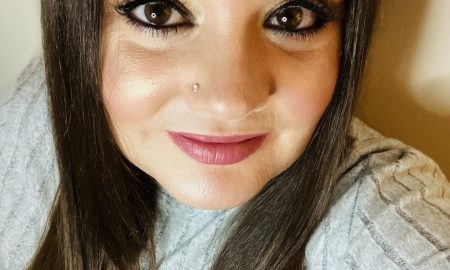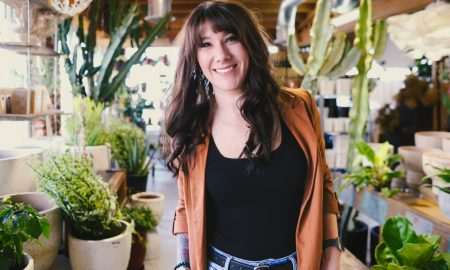


Today we’d like to introduce you to Brenda Bradfield.
Brenda, can you briefly walk us through your story – how you started and how you got to where you are today.
When I was 15, my parents divorced and my mom moved out. My dad was left in charge of us but was a severe alcoholic. After a month or two, he decided to move out too and left us behind. My brothers and I stayed in our house for two years after that. During that time, we no longer had heat, electricity or running water. I can’t describe the hurt that comes from feeling like your parents didn’t love you enough to take care of you. We scrounged for food- either stealing it or saving what I made from my job serving food at a retirement home, working 2-hour shifts which were limited because of my age. I sometimes would go days without any food at all. I used to sneak into my high school in the morning with my swimsuit and shampoo so that I could shower. We couldn’t wash our clothes, and kids at school were cruel. My brothers ended up dropping out of school. I almost didn’t make it through and stopped going to classes during my senior year after the psychology teacher made a comment about how nobody at our school knew what it was like to struggle. I was approached a few times by the school but was scared of getting my parents in trouble, so didn’t say anything about being abandoned and neglected.
Fortunately, my tennis coach came to me after I started failing my classes because I couldn’t play with my grades. I hadn’t been to school very often and was likely not going to graduate. He asked me what was going on, but my words failed me and I just cried. I couldn’t stop. He didn’t press for any more details but took me to the teachers of the classes I was failing, and they let me come back to class. Because of that coach, I was able to graduate high school, and that set me on a very different course for my life that what it might have been. A few months after that, the house we lived in finally foreclosed and my brothers and I parted ways.
I moved in with my boyfriend and after I graduated, his dad told me that I could continue to live with them only if I went to college. Again, because of that person, my life took a very different direction. I enrolled in community college and decided to go to nursing school. During that time, I was diagnosed with Type 1 diabetes. I thrive when I’m caring for people. I love helping them through some of their hardest times. I’ve worked in acute rehab, cardiac and orthopedics. I became pregnant with my daughter and ended up having a difficult birth with her, and almost lost her. She was in the NICU for three weeks, and my already existing depression was severely exacerbated. It became incredibly difficult to care for patients to the extent that I was when I could barely care for my newborn or myself. I left floor nursing for a couple of years to work as an inpatient diabetes educator in a large hospital- seeing patients with Type 1 diabetes, Type 2 diabetes, steroid-induced diabetes, Cystic fibrosis-related diabetes, and gestational diabetes. I became certified in Diabetes Education. When my marriage ended, I left Colorado to travel nurse and went to school online to complete my BSN, until I sustained an injury that would require surgery. That sent me back to Colorado, and I was fortunate enough to find a job working as a research nurse for Type 1 diabetes. I am now engaged, and my fiance supports, encourages and challenges me to continue to grow as a person, a mom and a professional. My mental health is in a better place, and I’m feeling ready to take on the future. I plan on becoming a Nurse Practitioner and continuing my journey in health care and research.
Great, so let’s dig a little deeper into the story – has it been an easy path overall and if not, what were the challenges you’ve had to overcome?
Being diagnosed with Type 1 diabetes a year into college was a huge obstacle for me. I already had major depression and learning to navigate my new reality with a chronic illness was rough. I had to learn the hard way that the tiniest mistakes with my medication could have dire consequences. I had to learn to be mindful of what I ate after going through a time where food was hard to come by. My prior eating habits were: when there is food around, eat as much as you can because you don’t know when the next meal will be. I had to overcome feelings of inadequacy and unworthiness. These feelings resurfaced when I had my daughter early and she spent time in the NICU with complications, and again once my marriage ended, and again any time I feel like I’m overwhelmed, failing, or can’t keep my head above water. However, my difficult past has shown me that I am resilient, strong, and capable of forgiveness. I hope that’s something my daughter can look up to. I would tell other women the same: you are capable, strong and worthy. As long as you keep going, and keep trying you will get through it.
Please tell us more about your work, what you are currently focused on and most proud of.
I am a research nurse for Type 1 diabetes (T1D), and I work at the Barbara Davis Center. Type 1 diabetes is an autoimmune disease in which beta cells of the pancreas are damaged, destroyed and no longer make insulin. Our body needs insulin to use glucose from food for energy, and people with Type 1 diabetes must take insulin through injections with a syringe or insulin pump to prevent high blood sugar. Without insulin, blood sugar becomes too high, leading to Diabetic Ketoacidosis (DKA), which is very dangerous, and other long term complications. Taking insulin keeps Type 1’s alive, but it does not cure diabetes.
The team I work for screens family members of Type 1 diabetics to identify those at high risk for developing T1D or in the very early stages of the disease. From there, we have prevention studies to see if we can delay or prevent Type 1. By monitoring these high-risk individuals closely, we are able to reduce the risk of diagnosis through DKA from 30% to less than 4%, and that’s pretty amazing. We also have studies for those newly diagnosed with Type 1 diabetes to try and preserve beta-cell function. I am passionate about making a difference for those with and at risk for T1D and educating others. Feeling like I have a role in finding a cure gives me a unique sense of purpose.
Finding a mentor and building a network are often cited in studies as a major factor impacting one’s success. Do you have any advice or lessons to share regarding finding a mentor or networking in general?
My advice would be, don’t be afraid to ask questions and reach out. I recognize that this is easier said than done since I have difficulties speaking up and can be very shy. Most of that stems from the fear of seeming like I don’t know anything, but what I’ve learned is it is okay not to know. Most of the time, people respect when you are honest about not having all the answers and that you are willing to learn. Social media has been very helpful in making connections, too.
Contact Info:
- Address: The Barbara Davis Center
1775 Aurora Ct.
Aurora, CO 80045 - Website: http://www.barbaradaviscenter.org/
- Phone: 303-724-8595
- Email: Brenda.Bradfield@cuanschutz.edu
- Instagram: _brendalorraine_


 Image Credit:
Brenda Bradfield
Suggest a story: VoyageDenver is built on recommendations from the community; it’s how we uncover hidden gems, so if you or someone you know deserves recognition please let us know here.
Popular
-

The Trailblazers: Rewriting the Narrative
-
Celebrating the Spotlight: Kaytee Shashore Turns Milestones Into Momentum
-
Humanity in the Machine: Alexander Raye Pimentel’s Cyborg Recall Questions the Cost of a Data‑Driven World
-

Raemi Anderson on Courage, Caution, and Answering the Call of the Landscape
-

Hidden Gems: Local Businesses & Creatives You Should Know