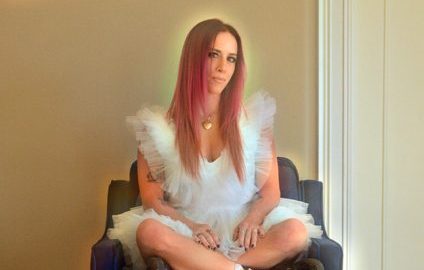


Today we’d like to introduce you to Cathie Christmas.
Cathie, can you briefly walk us through your story – how you started and how you got to where you are today.
When people ask me how long I’ve been working in the field of behavior therapy, I often tell them that I’ve been doing this my whole life, in a sense, but I didn’t know that there was a specific scientific field dedicated to it until 2005. “Applied Behavior Analysis (ABA) is a scientific discipline concerned with applying techniques based upon the principles of learning to change behavior of social significance” (Baer, 1968 and… Wikipedia).
Growing up in Great Falls, Montana, I was the fourth child in a family of five kids. My little sister, Teresa, was born with a chromosomal abnormality that presents with developmental and cognitive functioning similar to a combination of Down’s Syndrome and autism. Being the closest in age to Teresa, I was almost always in the same school as her. So naturally, it became my responsibility to help her stay safe, healthy, and on track through her daily routine. I learned along the way that helping someone learn a healthy behavior takes a combination of being patient as well as stubborn; I am proud to be both! Teresa has always been a great trainer for me!
Growing up with my sister Teresa gave me a different perspective on life. Without Teresa, I may not have developed my strong sense of personal responsibility, my work ethic, and my passion for helping people with special needs. My mother taught me to be resourceful and persistent, and she gave me my sense of humor. In my Longmont office, I tacked a small poster to the wall that reads, “Don’t be so hard on yourself.” This sounds like something my mom would have told me. I miss her dearly!
In 2005 while studying undergraduate psychology in Portland, Oregon, I worked as a paraeducator in a classroom designed for children severely impacted by autism. This classroom employed principles of ABA. From there, I worked as a behavior therapy technician as I continued my studies in related fields. In 2012, I completed my bachelor’s degree in Speech and Hearing Sciences at the University of Nevada. I continued to work as a behavior therapy technician, then program director, then clinical director of a small start-up ABA practice in Broomfield after I completed a Master’s in Education from Concordia University of Portland and a post-graduate program to become a Board Certified Behavior Analyst (BCBA).
I resigned my position as clinical director at the former practice and began serving my own clients within a few weeks by providing in-home sessions. In January of 2018, I founded Innovations Developmental Solutions (www.innovationsbehavior.com). By June of 2018, I had signed the first lease on a commercial space in Longmont near where many of my clients live. My reputation in Broomfield earned me enough clients to justify opening a second location there in May of 2019. Running two centers located 20 miles from each other is challenging, even when you trust your employees like I do. The clinical workload proved to be too much for me, so I took the leap in March of 2019 and hired another BCBA, who is doing an awesome job helping me grow the business through continually improving programs to the delight of our behavior technicians, clients, and of course clients’ parents and guardians. As of this moment, our team of 25 behavior technicians and credentialed professionals are providing high-quality ABA therapy to about 30 clients between our Longmont and Broomfield centers.
We’re always bombarded by how great it is to pursue your passion, etc. – but we’ve spoken with enough people to know that it’s not always easy. Overall, would you say things have been easy for you?
It has not been a smooth road but at least the stress is mine, and if it is bothering me I can take care of it since I have ultimate control of the options. The biggest struggles have been balancing being a clinician and business owner while raising two young energetic boys, aged three and one.
My advice would be to trust your instinct but also feel comfortable asking for help and support when you need it. You don’t need to have the answer to everything, but you need to know how to access all the resources available to you. If you can, find a mentor who you truly believe reflects your values in terms of your goals, your ethics, and your passion for your field.
We’d love to hear more about Innovations Developmental Solutions.
At Innovations Developmental Solutions, we work directly with clients with autism and other developmental disabilities to replace unsafe and undesirable behaviors with behaviors that can more consistently, safely, and effectively get their needs met. These needs might be as basic as asking for food and water, or they may be as complex as learning how to make friends or pass their first job interview. Clients come to us sometimes in a completely nonverbal state with no effective means of communicating their needs. Imagine how difficult, frustrating, and scary this would be for a child as well as his or her parents/guardians. Other clients come to us with incredible vocabularies and some impressive social skills, but still have a need for ABA to help them achieve their potential in life.
What I’m most proud of is our ability to effectively provide early intervention with the youngest of clients. To maximize the benefit (and to minimize the time ABA therapy is needed), early diagnosis and ABA intervention is critical. It is my goal that a client reaches a point that they no longer need ABA therapy.
What sets us apart from other ABA practices is that I truly care about the happiness and job satisfaction of our behavior technicians. They are the heart of any ABA practice because they are the ones most often working directly with our clients. They need to know and feel that they are doing their job well even during the difficult days when a client is not cooperative. They need to know that they are valued for the kindness, skill, patience, and persistence they bring to the job, but also for the wide range of fun personalities they share that make our centers happy and supportive for all of us. We support them in their personal journeys towards a fulfilling career, even if that career may not be in ABA. We simply want their time with Innovations to be something they will look back on with pride and satisfaction. We hope we can always convey this to them!
What do you feel are the biggest barriers today to female leadership, in your industry or generally?
The biggest barrier that I face as a female in a leadership role is balancing (or choosing between) my career and my children. I feel constantly torn between the two. When I’m in one world, I feel like I’m neglecting the other. Thankfully, I have a wonderful support team that includes two fantastic part-time nannies, our great neighbors, and most importantly, my husband who has never stopped supporting my dreams and pushing me to believe in myself.
Contact Info:
- Address: Longmont: 1833 Sunset Place Suite C, Longmont, CO 80501
Broomfield: 3400 Industrial Lane Suite 10A, Broomfield, CO 80020 - Website: www.innovationsbehavior.com
- Phone: 720-352-7458
- Email: info@innovationsbehavior.com
- Facebook: https://www.facebook.com/Innovationsbehavior/


 Image Credit:
Cathie Christmas
Suggest a story: VoyageDenver is built on recommendations from the community; it’s how we uncover hidden gems, so if you or someone you know deserves recognition please let us know here.
Popular
-

The Trailblazers: Rewriting the Narrative
-

Celebrating the Spotlight: Kaytee Shashore Turns Milestones Into Momentum
-

Humanity in the Machine: Alexander Raye Pimentel’s Cyborg Recall Questions the Cost of a Data‑Driven World
-

Raemi Anderson on Courage, Caution, and Answering the Call of the Landscape
-

Hidden Gems: Local Businesses & Creatives You Should Know