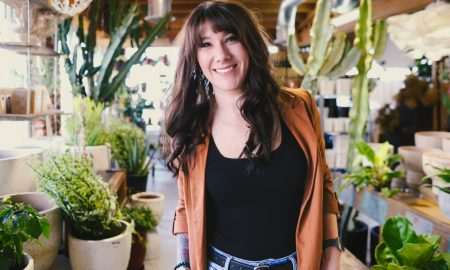


Today we’d like to introduce you to Elizabeth Dutro.
Elizabeth, please share your story with us. How did you get to where you are today?
There are many stories I could tell of getting to this point. I’ll focus on the story of how I came to write my recent book, The Vulnerable Heart of Literacy: Centering Trauma as Powerful Pedagogy, as it is a story that reaches back to my childhood and forward to where I am now.
From the start of my research career, I was spending lots of time with children in classrooms, observing and interacting with them as they engaged in school literacies. I was researching questions about children’s identities, particularly gender, race, and class, and the curriculum, instruction, and testing policies they navigated in classrooms. I noticed that, always, students’ difficult life experiences were present in classrooms and would arise in relation to conversations about books and in writing. Fifteen years before, when I was in high school, my younger brother, my only sibling at the time and my closest companion, was crushed by a falling boulder while playing with his best friend near a mountain stream. I found myself sharing my own experiences of loss with children when they shared their experiences with me. Children always responded with just the immense compassion and connection we know so well as teachers. Children lead the way in how to serve as witnesses to others’ hard stories.
That experience spun me back to several years earlier when I was teaching in a California elementary school, straight out of college, and realized how seldom I shared with students that I was deep in a grieving process that continued and would continue, still continues.
But, at that point, just a handful of years from my brother’s death, it so often felt so raw. I mean, I was still having those moments of closed-car-window screams, my clenched-fist fingernails cutting into my palms. I realized in retrospect that although I felt the connection with children’s losses, fears, longings, confusions—those big themes of life’s hard stuff—it was rare that I shared my connections.
Those realizations just kept accumulating in all the other days I spent with children and their literacies, as I moved from classroom teacher to literacy educator-researcher spending as much time as possible with children and youth. Difficult life experiences—for teachers and children—were living in classrooms, whether or not they were acknowledged in the official spaces of curriculum and instruction. And, they clearly had very different consequences for different members of classroom communities. I knew that children’s hard times were too often used against them, too often became the fuel for false assumptions of deficit in the lives of students of color and students facing economic struggle, including those with the intersecting identities of being bilingual, LGBTQ, or (dis)abled.
Those stark and consequential differences in how experiences are interpreted was viscerally present, for instance, when, a few years after that literature circle discussion, the prison industrial complex became part of my family’s story and I got to see surprise in people’s eyes if they learned this; for the children I spent time with who had incarcerated parents, their experience was most often met by adults in schools with whatever is the opposite of surprise. All of those experiences swirled in my thinking, building over time, changing my teaching and, a few years later, moved to the center of my research. Those were stories that required new and different questions and frameworks to better understand them. Those stories held high stakes for how to enact relational, humanizing, justice-centered pedagogy. A group of K-12 teacher colleagues and I began to pursue inquiries in classrooms that helped us think about what difficult experiences required in classrooms. I share both the research and the personal experiences that fueled it in my book.
We’re always bombarded by how great it is to pursue your passion, etc. – but we’ve spoken with enough people to know that it’s not always easy. Overall, would you say things have been easy for you?
The privileges I have as a white, middle class, cis-gendered, straight woman means the road is much smoother for me than for many others, for sure. And, of course, life holds struggles. Academia can be a less than a straightforward path. I have come to believe that life has to be about embracing the twists and turns of the road. We get one journey, one story to live. In relation to work, I can look back at unexpected twists in the road and how those allowed me to pursue something or meet colleagues that opened new inquiries and important connections and perspectives. I’ve been fortunate to have positive mentors, friends, and communities in the universities where I’ve done my work. I also have found wonderful collaborations with schools, teacher colleagues, and children in my research. I decided early in my career that I needed to pursue my passions in my research. If an opportunity came along that took me away from the inquiry and writing that felt closest to my heart and commitments, I said no. I do think that staying as close to my commitments as possible and working with positive people provided fuel to navigate the demands of academia while doing the research and writing I most want to pursue.
We’d love to hear more about the University of Colorado Boulder.
I’m a professor of education at the University of Colorado Boulder, specializing in the area of literacy. My research studies are linked by a commitment to educational equity, particularly for those children who have been least well served by public schools. The primary strands of my research grew from my encounters with children, curriculum, and educational policy in my own teaching in an elementary school where many families were experiencing poverty and inequitable social systems. My studies are driven by questions about the intersections of literacy, identity, life experiences, and children’s and youth’s opportunities for positive, sustained, and productive relationships with schooling. Through close collaborations with children and teacher colleagues, my current studies include critical and affective framings of what trauma means and how trauma functions in classrooms; teachers’ opportunities to learn together in the context of their daily work and relationships with children; and critical-affective pedagogies in teacher education and classroom literacies.
I think one of the things I may be known for is taking a creative approach to the academic writing process. If I’m writing about the importance of listening closely to children and the importance of stories of experience that gets lived and shared in schools, I want my writing to perform those arguments. For me, that means writing in ways that try to cultivate connection and feeling for the reader. I enjoy pushing on the boundaries of academic genres. And, of course, genre is connected to the outlets and audiences we pursue as academics, so my writing may look and feel different based on the outlet I’m pursuing to share my research. I also find it important and gratifying to attempt to reframe some of the consequential assumptions and binary ways of thinking that can settle so quickly in educational policy and practice (as with all fields and disciplines). I hope I’m known for always seeking to revise settled narratives in ways that strive toward justice for children and youth. It is striking to be asked what I’m most proud of! I realize I most often think about my pride in my children and family, but it is important to think about professional points of pride. I am proud that I’ve constructed a work-life in which I can share my research in multiple ways through varying contexts. It allows me to truly feel joy and gratitude in my work.
We’re interested to hear your thoughts on female leadership – in particular, what do you feel are the biggest barriers or obstacles?
Academia, like other professions, too often devalues women’s contributions, particularly the affective work so many women take on in their departments that can be so invisible. This is certainly, even more, the case for women-identified people of color in academia. Service work often falls inequitably along gender lines in academia and it takes vigilance for leaders to see that and work toward rectifying those patterns. And, I’ve certainly experienced, as have countless women, the sexualizing and, thus, belittling that happens in both subtle and more explicit ways over time. One way I’ve described it to early-career women who’ve confided their experiences is that, over time, the sound of powerful white male scholars falling off of pedestals is deafening. I am hopeful that this will change with recent movements toward women feeling more empowered to speak to various ways they’ve been undermined and silenced (including, of course, sometimes horrifically violated and harmed). That all said, I am in a field that has for quite some time centrally included women in leadership and is increasingly including women of color in leading our profession. I am inspired by women leaders in my life, in my home institution and my broader field.
Contact Info:
- Website: elizabethdutro.com
- Email: elizabeth.dutro@colorado.edu
- Instagram: edutro
- Facebook: https://www.facebook.com/elizabeth.dutro
- Twitter: @lifeasstory
- Other: https://www.colorado.edu/education/elizabeth-dutro-0
 Image Credit:
Ichigo Takikawa
Suggest a story: VoyageDenver is built on recommendations from the community; it’s how we uncover hidden gems, so if you or someone you know deserves recognition please let us know here.
Popular
-

The Trailblazers: Rewriting the Narrative
-

Celebrating the Spotlight: Kaytee Shashore Turns Milestones Into Momentum
-

Humanity in the Machine: Alexander Raye Pimentel’s Cyborg Recall Questions the Cost of a Data‑Driven World
-

Raemi Anderson on Courage, Caution, and Answering the Call of the Landscape
-

Hidden Gems: Local Businesses & Creatives You Should Know