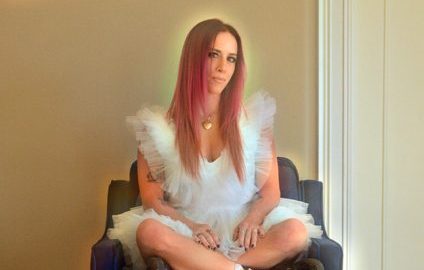


Today we’d like to introduce you to Katie Hilborn. She’s been on the forefront of empowering women to drive change both locally and abroad for over a decade. In 2011 she founded Global Orphan Prevention and was nominated for Millennial Changemaker of the Year for her relief efforts after the 2015 Nepal earthquake. She delivers impact through Keynotes, leaving the blueprint for others to lead a life of passion and purpose.
Katie, please share your story with us. How did you get to where you are today?
Many of us exist on this planet to grow and evolve. Bettering oneself as we navigate the many facets on this planet; the seen and unseen; the connections and synchronicities; the curiosities and the endless search for the WHY. Why are we here? It’s this constant quest for meaning, that something exists that is greater than us. It’s learning about our world and finding our place within that world.
I’ve spent my entire adult life on this perpetual self-actualization, the realization or fulfillment of one’s talents and potentialities. It’s really the pinnacle of life’s greatest achievements, once we can move past having our most basic needs of survival met. Psychologist Abraham Maslow speaks of this often. It’s when we find our Purpose; the responsibility and duty we feel to accomplish a particular mission in life. It’s our association with Humanitarianism; that deep sense of identification with all human beings. It’s our Equanimity; how resilient we are in the face of adversity. And it’s a mixture of Authenticity, our Creative Spirit, our continued freshness of Appreciation, those Peak Experiences, and most importantly, Acceptance.
After graduating college in 2006, I took a 5-week backpacking trip through East Africa with my now mentor and friend, Chad Thatcher from my school’s Outdoor Program. We were coached to venture off and have that “walkabout” moment of epiphany and realization. That first turning point of self-discovery came in the form of living with the Maasai Tribe. In Tanzania, many hours into the heart of the great golden plains, where scattered Acacias trees dot the horizon and the mighty roar of the lioness, the pride, echo far in the distance. Each dusk awaking them from their lazy naps to begin the hunt for meat; for survival.
The hospitality I felt from the family that housed me in their clay hut with thatch roof was unparalleled to any engagement I was formally privy. It ultimately led me on that path of connection with others on this planet. Hearing stories of struggle, merely living to survive. It made me realize that for very little money, I could have a huge impact on the lives of others.
I spent the following summers visiting new countries and finding ways to give back; whether it was walking pumas through the jungles of Bolivia at a wildlife refuge, or working in Ugandan schools. It was rewarding for many years, but I decided in 2011, that I wanted to do more than simply bring myself. I wanted to create something long-lasting.
I transitioned from ‘Katie the Volunteer’ to ‘Katie the Changemaker’; a changemaker essentially turns complaining into action, and we’re not that much different than business entrepreneurs, meaning we want to help the state-of-(wo)man and reach and many people as possible.
That summer, India was identified as a potential region I wanted to spend my focus. While they have been able to lift a significant percentage of its population out of poverty in recent years, back then, it was still considered to be one of the poorest countries in the world: about 60% of India’s nearly 1.3 billion people live on less than $3.10 a day, the World Bank’s median poverty line.
Upon arriving in the country, in a very uncomfortable July, coupled with 100% humidity and 100 degrees, I realized my Colorado mountain brain functioned at a muggy half-speed, so I traveled north to Nepal. The 14-hour bus ride from Varanasi – a sacred pilgrimage site on the Ganges – was bumpy, cramped, dusty, had a chicken or two, and a baby on my lap for a portion. My travel buddy Jesse glared at me often for suggesting this ride were to be a fun time and anxiously awaited our arrival.
But then, as experience often has it, we crossed the border; the temperature dropped fifteen degrees, the heavens parted ways, and we were submerged in the beautiful foothills of the mighty Himalayas. The destination is always rewarding if we can remember that the journey is part of the evolution.
In the months that followed, I traveled around the country finding a need. I had raised $3,000 before my arrival from family and friends with the intention that I would blog about how I would spend their charity once I arrived. I guess my years of volunteer service gave me some credibility. We began buying children’s clothing for a few orphan homes and paying their utilities. But it was through a series of investigations that I discovered that 85% of children in orphan homes had living parents (UNICEF). That’s a worldwide statistic too.
Volunteers and overseas donors funnel money into the institutions, but no one really helps the widowed or abandoned mothers. Many of these women come from the lowest caste in Hindu society, the Dalits or “untouchables” who are considered lower than livestock in the eyes of many. Life is already egregious beforehand, but now on their own, they are powerless without their husbands. Many resorts to giving their children to the for-profit orphan homes. In some cases, the children are abducted and sold by traffickers.
An organization who had been deinstitutionalizing orphan homes and reuniting children with their families partnered with me, and we explored various ways to sustain families through social enterprise, ideas I had pulled from political science courses in college. That first summer was spent investing in farming-based businesses for mothers so they could afford to keep their children!
And thus my charity, Global Orphan Prevention was born. I spent the following year forming the organization and registering as a 501(c)3 nonprofit entity with the United States government with the mission of “keeping mothers and children together through economic development and education.”
Great, so let’s dig a little deeper into the story – has it been an easy path overall and if not, what were the challenges you’ve had to overcome?
Self-actualization is rarely a smooth journey and it some cases, it can take a lifetime. According to BigThink.com, “after reading Maslow’s works, people literally told their therapists that they had reached the top of his hierarchy. Given that Maslow wrote in his book Towards a Psychology of Being that less than 1% of the adult population manages to reach that level, he found the slew of reports to be strange and problematic.
One of the most common criticisms of Maslow’s concept of self-actualization is that it appears to be limited to those who have had good fortune in their lives. Consider his hierarchy of needs, the lowest level is physical needs that must be met and the second level includes the security of the supply of the things that fill those needs. If you don’t have a fair amount of financial security, you aren’t going to get past level two, let alone to self-actualization.”
Immediately when reading this, you might think that you need financial security to even begin on the journey of self-actualization. I argue this as a half-truth. You don’t need to have all your ducks in a row for lift-off, you just need to be OK with where you are at currently. There have been many times that I’ve brought my bank account to zero in pursuit of my dreams. I’m not afraid of failing. Henry Ford once said, “failure is simply the opportunity to begin again.” I find gratitude in the things that I do have and I recognize my privilege for simply being an American.
Did you know that if you have food in the refrigerator, clothes on your back, a roof over your head and a place to sleep, then you are richer than 75 percent of this world? Even something as simple as having money in the bank or spare change in a dish someplace affords you the luxury of ranking among the top 8 percent of the world’s wealthy.
Alright – so let’s talk business. Tell us about Global Orphan Prevention – what should we know?
Since forming Global Orphan Prevention in 2011, we’ve course-corrected along the way. I’m currently working with my team to eradicate child trafficking in the remote-access Nepali Himalayan village we operate. In 2015, there were a series of earthquakes that destroyed 50% of the country’s economy, 10,000 people died, and one million became homeless. It happened to occur in the #1 child-trafficking district of the entire country and ultimately brought international attention to a centuries’ old problem.
While delivering relief to this mountainous region, driving five hours on windy road often with a 500-foot drop on either side in high clearance 4WD jeep, then trekking another three hours to the top of the mountain emerging above the clouds, we discovered a terrible underbelly while delivering aid; that 25% of adolescent girls go “missing” every year. They are being lured and manipulated to leave the safety of their villages, and then trafficked to the for-profit orphan homes or Indian brothels. Human trafficking worldwide is an annual $32 billion industry. Traffickers in Nepal can earn up to a year’s income for the sale of one girl.
It’s an audacious goal to say, “hey this is a problem, and now, we’re going to put a serious dent in this.” But with the right team of people to propel a vision forward, anything is possible.
I have some of the most brilliant minds and visionaries partnering with me to tackle this. And not just those with vision, but those that know how to move that vision from A-to-B. We’re building a scalable model for prevention that includes economic development and education through our Girls’ Empowerment Centers. I know very few organizations that get to the root of child trafficking, but we’re in alignment with the Nepali government plan to stop this terrible epidemic. 70% of the girls abducted are illiterate, disempowered, and living in poverty.
Isn’t it beautiful to give little girls everywhere the opportunity to be seen, to be heard, and to be valued, and that starts with education. Just as women in the United States have been on that same path for equality in the last century, we need to ensure that others have a similar opportunity throughout the world. When they rise, we also rise. We’re all connected and it is in our best interest to take care of others. It’s the essence of who we are as a species.
Contact Info:
- Website: KatieHilborn.com / GlobalOrphanPrevention.org
- Instagram: Instagram.com/globalorphanprevention
- Facebook: Facebook.com/GlobalOrphanPrevention


 Image Credit:
Jenna Noelle Photography
Getting in touch: VoyageDenver is built on recommendations from the community; it’s how we uncover hidden gems, so if you know someone who deserves recognition please let us know here.
Popular
-

The Trailblazers: Rewriting the Narrative
-

Celebrating the Spotlight: Kaytee Shashore Turns Milestones Into Momentum
-

Humanity in the Machine: Alexander Raye Pimentel’s Cyborg Recall Questions the Cost of a Data‑Driven World
-

Raemi Anderson on Courage, Caution, and Answering the Call of the Landscape
-

Hidden Gems: Local Businesses & Creatives You Should Know