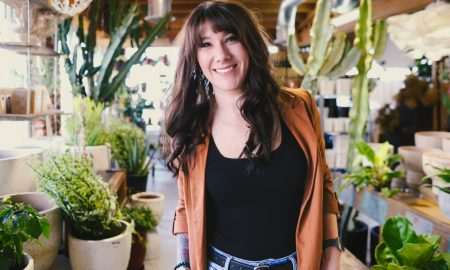


Today we’d like to introduce you to Noemy Rodriguez.
Thanks for sharing your story with us Noemy. So, let’s start at the beginning and we can move on from there.
I grew up in Swansea-Elyria, right next to the I-70 Highway and Purina Dog Food Factory. I remember as a kid, seeing the highway right next to me during recess and smelling the fumes of the Purina Factory. For me, this felt like home. It was all I ever knew. My parents came to the U.S. from Mexico and made a life for us here in Colorado.
As the saying goes, my parents came here to give their children the opportunities they didn’t have back in their home country. My parents saw education as the pathway out of poverty and out of our neighborhood. In all honesty, I loved my childhood and growing up where I did. We didn’t have much luxuries growing up, but we had enough to live a happy and stable life. I knew that education was an important part of my life, especially since my parents encouraged us to be the best students we could be. It wasn’t until I reached high school that I began to hear about the statistics that were projected onto me based on my zip code area; all of which stated that I would either be a high school dropout, pregnant, in prison or dead. People always told me, “You don’t want to be a statistic”. I remember sitting in my high school speech and debate class while a presenter told us that only 1 out of 10 people in the class would actually make it to college. I knew I wanted to be a statistic… but I wanted to be the statistic of people like me graduating college.
As I progressed in high school, I realized that I wanted to become a teacher. My goal was to graduate college, come back to my high school, and become a math teacher. I wanted to give back to my community and be an example for the students in my community that they too, can reach their dreams. I enrolled at the University of Northern Colorado and eventually realized that I didn’t want to be a teacher. Although education and serving students became my passion, I knew that my classroom wasn’t just confined between four walls in a school building. Rather, I knew that any space I would step into would become my classroom. In May 2016, I was the first in my family to graduate college with my Bachelor of Arts in Sociology. But as one dream comes true, bigger and stronger dreams began to unfold. I soon decided that I wanted to be the first person in my family to obtain a Master’s degree.
During my graduate program, I faced one of the biggest obstacles in my life. As I was transitioning into my program, my mother was back and forth in the hospital due to her chronic illness. My mother suffered from Autoimmune Hepatitis. It wasn’t until 17 years later, that my mother’s liver began to fail. She was in and out of the hospital due to severe complications. She was in dire need of a liver transplant. As a Mexicana woman in higher education, I felt pushed and pulled from so many directions. I felt a great deal of responsibility to be there for my mom and my family who were navigating her health at the time, but I also felt a great deal of responsibility towards my education. I struggled to find balance between all the responsibilities that I had and trying to be there for my mom and also for myself. I reached a breaking point and reached out to my faculty in the program to explain my situation. At first, I felt scared, nervous, and ashamed for doing so because I didn’t want people to feel bad for me. However, I had to learn that asking for help isn’t a sign of weakness, instead, it is a sign of strength. I will always be grateful for my professors who cared for my well-being and the well-being of my mom and family. Through their support, I was able to channel my emotions and thoughts into my master’s thesis project. As my mother was recovering from her liver transplant, I was collecting data and literature for my Thesis titled “Latino Family Dynamics in the Pre and Post Organ Transplantation Process”. In March 2018, I defended my thesis with the presence of my mother, brother, sister, aunts, and close mentors. In May 2018, I became the first person in my family to have a Master’s degree. Thinking back and reflecting on my time and journey growing up, I never forgot about the messages I received about becoming a statistic. Little did I know, that I would become part of the smaller statistic of Latinas with a Graduate degree. Since graduating, I have continued my work with other first-generation, low-income, students of color from my community and communities reflected in mine. I had the honor of working for INSPIRE, which is a non-profit organization that works to empower youth to become social change agents in their families, schools, and communities.
Through this experience, I was able to share my story and experience with students who reflected some of the same struggles I had as a senior in high school. Working with youth is my passion and life-calling. Now, I am currently working for the Family and Community Engagement office through Denver Public Schools as a Program Specialist at North High School. I work to provide students wrap-around support through education and employment, as well as continuing to foster lasting relationships with the students and families at North High School.
Overall, has it been relatively smooth? If not, what were some of the struggles along the way?
As my dear mentor, Dr. Berlinda Saenz once told me, “Change is inevitable”. I used to think that graduating college would automatically solve all my problems. Life never stops happening. I saw this firsthand while being a graduate student and daughter to a parent going through a liver transplant. As a woman of color in higher education, I experienced “Impostor Syndrome”. Which meant that I constantly doubted my abilities and myself. I felt that someone would expose me as a fraud. It took me putting my shield down and reaching out for help, especially with people who knew my abilities and people who I aspired to be like.
My advice for women, young women, women of color, or any person who identifies as a woman is to surround yourself with people who will uplift you, remind you of how amazing you are, who push you to keep fighting for your dreams even if life gets in the way, and to find ways to take care of yourself. Especially if you are a woman with many marginalized identities, it is critical to find role models, mentors, people who are allies to support you and validate when you don’t feel like things are going at its best. Validating your emotions and what is real for you is SUPER important in helping you begin the process of healing and moving forward. Always remember to move at your own pace.
What do you do, what do you specialize in, what are you known for, etc. What are you most proud of? What sets you apart from others?
I currently work as the Program Specialist, Youth Self-Sufficiency for the Family and Community Engagement (FACE) program with Denver Public Schools. I work at North High School in providing wrap-around services for seniors who need extra support academically, as well as providing them with an opportunity to explore work experiences/internship opportunities in their area of interest(s) through the Workforce Innovation Opportunity Act (WIOA). This federally funded program allows youth to gain valuable work-related skills during an internship of their choice and receive compensation for their work. My passion has always been in helping students realize that their stories hold value and power. Being that I am also part of that narrative, I feel that I do my best every day to make sure that I own the power of my story and show students that they also need to take space to own their stories. I am very grateful to have had the many opportunities presented to me, whether it was through college and in my professional development, to gain a deeper and richer understanding of identity work and how it plays a role in everyday interactions.
We’re interested to hear your thoughts on female leadership – in particular, what do you feel are the biggest barriers or obstacles?
I feel like women in general, constantly deal with the barrier of proving themselves in any setting; whether that is at work, home, with family, and so on. Women take on many roles in their lifetime and constantly deal with the expectations set from family, friends, spouses, children, and society. When those expectations aren’t fulfilled, women can often be penalized and looked down on for not being the “perfect” woman. Women will often put the needs of others before themselves and forget to take care of their needs.
Contact Info:
- Phone: 720-526-3503
- Email: nrod012@gmail.com


 Image Credit:
INSPIRE
Suggest a story: VoyageDenver is built on recommendations from the community; it’s how we uncover hidden gems, so if you or someone you know deserves recognition please let us know here.
Popular
-

The Trailblazers: Rewriting the Narrative
-

Celebrating the Spotlight: Kaytee Shashore Turns Milestones Into Momentum
-
Humanity in the Machine: Alexander Raye Pimentel’s Cyborg Recall Questions the Cost of a Data‑Driven World
-

Raemi Anderson on Courage, Caution, and Answering the Call of the Landscape
-

Hidden Gems: Local Businesses & Creatives You Should Know