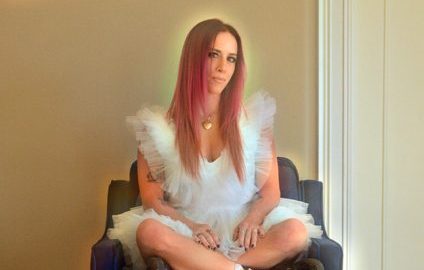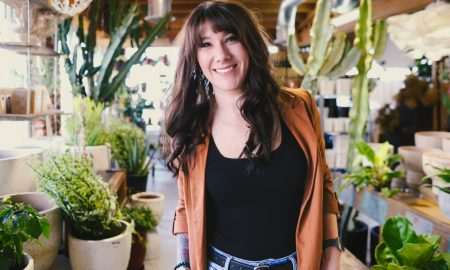


Today we’d like to introduce you to Rachael McClair.
Thanks for sharing your story with us Rachael. So, let’s start at the beginning and we can move on from there.
I often say, had there been a vote when I was younger, I definitely would have been voted “Least Likely To Be A Pastor.” I certainly never had an ambition for this, although I’ve never been described as a particularly ambitious person in general. Rather than heading immediately to college, I opted to travel and learn about life and the world through less traditional methods. I spent a total of five months on the road touring the U.S. I saw Australia, New Zealand, Mexico, Uganda, Spain and the island of Trinidad. I worked a lot of odd jobs, finding them excellent classrooms for both practical skills and, on a more macro level, the nature of people and the role of religion in society.
Music has always been my main love, but I lack not only the ambition it takes to be a successful recording artist, but I also lack the interest in entertaining as a performer. My love of music has been connected more to the way music as an art form weaves in and out of our daily lives. I love music for the way a particular song can slingshot you back in time to that exhilarating moment you first drove on an open road, windows down, feeling free, with your song blasting in the background, enriching your experience. I love music for the way a song can remind you of first love or first heartache. I love music for the way it can bring you to a place of transcendence – that feeling of knowing you are a part of something much bigger than yourself.
For me, as an artist, the most transcendent moments of making music happened in the smallest of venues, in the quietest of moments. One of those moments was visiting a two-year-old girl in a hospital in Ciudad Juarez, Mexico. Many of her bones were broken from abuse by her parent, and she lay in the bed whimpering because it hurt too much to cry. I don’t know her name. But as I began to sing her lullabies, in Spanish and in English, she closed her eyes, and for a few moments, became silent and still.
In 1999, I moved to Denver, CO from my hometown of Albuquerque, NM. I was 23 years old and was beginning to feel stuck, maybe a little lost. I had done all of that traveling, I had taken classes at UNM, and worked an assortment of jobs, none of which seemed like anything you’d call a career path. The move to Denver was my way of disrupting my norms, shaking everything up, and seeing what would become.
At that time, I was somehow simultaneously a conservative Evangelical Christian, and also somehow NOT fitting into that mold. I was trying to follow all of the rules, but this system of Christianity I was following was starting to not make any sense to me anymore. I had a true crisis of faith. I began attending a church in Denver called Pathways Church. It was the first time I had ever experienced church without feeling like something I said (which, if I’m honest, probably contained at least one expletive) was going to get me “called into the principal’s office.” Or the pastor’s office, as it were. It was a church where not only I could ask hard questions of doubt, but the pastors who preached did the same, often without trying to tie up all the loose ends by the end of the sermon. It was refreshing and became the place where I could deconstruct all the religion of my upbringing, and see if there was still something (or someone) there worth following.
For me, there was, and so I stayed in the Christian faith, though I shed the “Conservative” starting point of approaching the Bible as the absolutely perfect word of God, to be taken “literally,” and I shed the culture of Evangelicalism, with its transactional understanding of salvation.
I sometimes say that I “Forrest Gumped” my way into pastoring a church because somewhere along the way of all my deconstructing of Christianity, and sifting through the ashes to find the golden nuggets of beauty and truth, I began to lead music at Pathways. It started out as just singing as a volunteer. Slowly over time, I began to take on more and more responsibility, both administratively, but also theologically. I was hired in 2001 and given the title of “Worship Pastor” in 2002.
I stayed in that role for Pathways until 2008. I learned so much in those seven years, finding the role of “pastor” to be the most intense classroom of all. But I also found in it the intersection of my gifts as a musician with a desire to use music as an access point to people’s lives and, perhaps, moments of transcendence.
In 2008, I left Pathways Church and joined my co-worker Rev. Mark Tidd to plant a new church that started in 2009. Highlands Church also had roots in the evangelical church but began as fully inclusive of LGBTQ people – among the very first in the nation. (To be clear: there are several denominations ahead of us, like the United Church of Christ and the Episcopal Church, among a few others. But coming from a non-denominational, evangelical heritage, our church was the first that we know of.)
Whether you have a religious background or not, I don’t think I have to take much time to explain how much we were hated for our theological inclusivity of the LGBTQ community. We were such an anomaly that the Associated Press and CNN did a story on our us. And we began to see people coming to us on Sundays from all over Denver, and beyond.
About a year into our existence, as Mark and I had our heads down, working hard to keep this new church solvent and growing, Rev. Jenny Morgan, who had been involved as a volunteer, approached us. She was noticing something unique about the way Mark and I worked together. She saw how collaborative we were, and how unusual it was to see a white, straight, cis-gendered man share power so freely. She joined our little pastoral team, and together we three shifted our titles to co-pastor.
Highlands Church North Denver just celebrated her 10th anniversary. About five years ago, we began to hear from more and more evangelical pastors around the country who needed someone to talk to about a theology of inclusion for LGBTQ people. These conversations were so dangerous to the livelihood of the pastors that they often took place in total secrecy. Slowly, more and more pastors of thriving churches, big and small, began to talk to their congregations about becoming an inclusive church for all people, fully affirming the orientation and identity of all God’s people. Many of these churches fell apart, and the leaders suffered for their new stance.
It was just the beginning of a growing wave of inclusion happening around the U.S. For Mark, Jenny, and I, we felt called to support pastors as best we can because we know from many, many stories that having an affirming faith community literally saves the lives of those who are looking for it. I joined the leadership team of an organization begun by Doug Pagitt and Carla Ewert called OPEN. It began as a gathering place for pastors who found themselves in a more progressive version of Christianity, and who desperately needed a group of peers in order to survive the antagonism and hate they were experiencing for their just choice of inclusion. This organization is now called W/ (pronounced ‘with’) and offers the same community and space for theological learning and re-construction. I have been the Chairperson of the Board for W/ since early 2018.
We’re always bombarded by how great it is to pursue your passion, etc. – but we’ve spoken with enough people to know that it’s not always easy. Overall, would you say things have been easy for you?
I can’t imagine that anyone could describe their professional journey as “smooth” because, firstly, we’re working with people. And people are hard to work with. But secondly, the obstacles are an essential part of our growth. Often they can help us become myopic about the right things – specifically, our values.
My time at Pathways Church ended under such circumstances. The Lead Pastor of that church was becoming increasingly driven towards success as defined by church size. To accomplish that, he was intent on shifting the worship culture of Pathways to that of a typical mega-church, which could be defined in one word: entertaining.
We began to have arguments over seemingly small things like how loud to mic the kick drum so that the music would make the service feel like a party (at 9:30 in the morning), or whether to have a 30-second countdown video playing before the service starts, so as to build a sense of anticipation for the “event.” I realized that what we were really arguing about was actually a theological understanding of the purpose of worship and music in a church service. And I also began to get quite clear on my own calling as a Worship Pastor, rather than an entertainer.
This 9-month obstacle ended with me leaving my position, which was hard and scary. But it also ended with me having so much clarity about who I am, and what my gifts are (and aren’t). Additionally, provided the space for me to consider helping Mark plant Highlands Church, which has been a tremendous gift. In my role as co-pastor, I have been able to exercise all facets of my leadership abilities, beyond my role as an artist and musician. It turns out, all those odd jobs I had equipped me with a broad skill set for leading strategic planning and developing staff, among other things.
For women just starting their journey, I encourage you to make the world your classroom and to remember that you yourself are an important subject matter. Whether you graduate college or you find a less traditional route, make sure that you are doing the hard work of introspection along the way. Learn more about why you do the things you do. Understand and own your gifts, and learn about the dark side that comes with those gifts. The better you understand that your gift has some harmful blind spots, the more you can learn to mitigate those impacts. It’s the path to becoming the best version of yourself.
We’d love to hear more about Highlands Church North Denver.
I love the phrase “HOW we do what we do is as important as what we do.” As a leader, particularly as a faith leader, this statement is grounding to me. It flows from my work in a couple of meaningful ways.
Having a leadership structure which is collaborative and shared is one of the “how’s” that has far-reaching impacts on our organization. While many beautiful organizations are led by one visionary, we have found resonance in having three people share the vision and responsibility. For us, this is theological – it’s the way we understand the nature of God to be. Additionally, rather than the danger of becoming a cult of personality, our church has the benefit of seeing three people share power, work to be mutually deferential, and far more grounded by each other.
It’s really hard work to share power with two other people. We over-step, under-step, get frustrated, and sometimes wish we could just “take the reigns” from the others and get things done more quickly. However, in these moments of conflict, because we have committed to doing the hard work of believing the best about each other, and speaking up when we’re upset, something far more beautiful happens. Trust continues to deepen, and our decisions are better, more thoughtful decisions because of the work it takes to get there.
I am extremely proud of the hard work the three of us have put into this way of leading. Within this collaborative system, our faith community sees a representation of God that includes women, people of color, LGBTQ and non-binary people. With three co-pastors, our community has a more tangible example of what it looks like for men to share power with women. They also begin to see that they have a place to do whatever it is they feel like is “theirs” to do in the world, rather than relying on the clergy.
The other “how” I am most proud of is that we have created a faith community where people feel that they are not only TRULY welcomed, but that they belong. Most churches say they are “welcoming” of LGBTQ people, but in reality, continue to hold the belief that there is something fundamentally wrong and sinful about them. I could tell fifty stories similar to Joe’s. When Joe first came to Highlands Church, he was a young, gay man who was terrified that he would have to either live a celibate life or lose God. He had so many questions and so many fears. Slowly over time, Joe’s fears were answered with love from a God who created Joe exactly as Joe is.
Each week, we read a “call to worship” in our services which we call our Ethos. Rather than a list of beliefs, we gather under the umbrella of our Ethos, which is a deeply theological description of what our community looks like. It was written by my co-pastor Mark Tidd, and goes like this:
Married, divorced, and single here.
it’s one family that mingles here.
Conservative and liberal here,
we’ve all gotta give a little here.
Big and small here,
there’s room for us all here.
Doubt and believe here,
we all can receive here.
LGBTQ and straight here,
there’s no hate here.
Woman and man here,
everyone can here.
Whatever your race here,
for all of us grace here.
In imitation of the ridiculous love Almighty God has for each of us and all of us, we live and love without labels.
This Ethos is what lets people know that this faith community is safe for them. And it’s a place of belonging. For us, the Ethos is an expression of how welcoming we believe God is to all people, all of the time. The word “evangel” comes from the root word meaning “good news.” For us, this kind of non-transactional, all-encompassing love, is really good news. It’s good news for all people. It’s the only kind of religious message I have any interest in being a part of.
Which women have inspired you in your life?
There aren’t a lot of women in my industry because the conservative church has for so long taught that women are to be subservient to men. Being a female pastor can be tremendously hard because not only do we have the culture at large telling us that we are worth less than men, we have “the church” telling us God ordained it to be so. “Me, too” is alive and well in the Christian churches.
Having said that, there are a few women who have inspired me. I have a hard time relating to women who are especially driven and focused. I admire the hell out of them – I’m just not wired that way. Instead, the women who have inspired me have been women who have learned to trust their voice in the midst of great self-doubt. They are women like Brené Brown who have understood the role of vulnerability in strength. I’m inspired by women who choose to see other women, not as competition, but as someone to champion, like India.Arie.
I often refer back to the poem by Marianne Williamson, “Our Deepest Fear.” In it, she says, “Your playing small does not serve the world. There’s nothing enlightened about shrinking so that other people won’t feel insecure around you. You are meant to shine…” Many days it feels like she wrote those words just for me. I need her reminder that begins liberated from my own fears begins to liberate others from theirs. That’s the kind of person I want to be in the world.
Contact Info:
- Website: hchurchdenver.org withcollective.org
- Email: rmcclair@highlandschurchdenver.org
- Instagram: hchurchdenver
- Facebook: hchurchdenver


Suggest a story: VoyageDenver is built on recommendations from the community; it’s how we uncover hidden gems, so if you or someone you know deserves recognition please let us know here.
Popular
-

The Trailblazers: Rewriting the Narrative
-

Celebrating the Spotlight: Kaytee Shashore Turns Milestones Into Momentum
-

Humanity in the Machine: Alexander Raye Pimentel’s Cyborg Recall Questions the Cost of a Data‑Driven World
-

Raemi Anderson on Courage, Caution, and Answering the Call of the Landscape
-

Hidden Gems: Local Businesses & Creatives You Should Know