



We’re looking forward to introducing you to Ravi Myxotic Ramadeen. Check out our conversation below.
Good morning Ravi Myxotic, we’re so happy to have you here with us and we’d love to explore your story and how you think about life and legacy and so much more. So let’s start with a question we often ask: What are you most proud of building — that nobody sees?
Myself. The work I’m proudest of happens where no one can see it. I’ve lived with depression for most of my life and, earlier on, a darkness that made staying feel negotiable. I won’t turn this into a confessional, but the real project has been daily, unglamorous labor: therapy, rigorous self-inquiry, telling the truth about my failures in business and love, and making repairs where I caused harm…whether I meant to or not.
The quiet miracle is that my inner child feels safe now. That didn’t happen decades ago, it happened recently. The best thing I’ve built is an interior with foundations strong enough to hold both joy and regret. It’s never too late to renovate the person you were yesterday.
Can you briefly introduce yourself and share what makes you or your brand unique?
New York raised me, but it was my immigrant parents’ relentless hustle that shaped me. They carved out opportunities my sister and I could step into. This work isn’t just success; it’s a tribute to their courage and a promise to my mother that their journey mattered.
There was no grand blueprint when I began the business. I fell in love with music at fourteen; by seventeen, a late-night joke with my best friend became Myxotica and we made it real the very next week. That was 2001. Nearly a quarter century later, I’m humbled by the distance traveled and still amazed that I get to wake each day to do work I genuinely love. Now, as a man in his forties, I’m expanding Myxotica into a full record label and media company. A long-held vision I’m finally choosing to honor. The build is rarely smooth as we’re meeting our share of snags. But momentum is real, direction matters, and gratitude keeps the work grounded. What began as curiosity has become a calling, and I’m committed to shaping a platform where artists and stories can thrive.
Great, so let’s dive into your journey a bit more. What breaks the bonds between people—and what restores them?
Breaking bonds isn’t always the dramatic betrayal; it’s the quiet creep of dishonesty. The email left unanswered, the truth edited for convenience, the promise made and then rationalized away. Dishonesty corrodes trust the way rust eats metal: slowly, invisibly, and then all at once. In business and in life, relationships fracture when people stop believing that what’s said lines up with what’s done.
Restoring those bonds takes accountability. Not the public performance of apology, but the private, steady work of owning the gap between intention and impact. Accountability sounds like, “I did this. It caused harm. Here’s what I’ll do to repair it—and here’s how you’ll know I’ve changed.” It looks like consistency over time: telling the truth when it’s inconvenient, setting expectations you can meet, and making amends without demanding immediate forgiveness.
In teams, partnerships, and customer relationships, trust isn’t rebuilt by perfection; it’s rebuilt by alignment with words, actions, and values pointing in the same direction, again and again. Honesty is the spark, accountability is the fuel, and time is the oxygen. Together, they turn fractured connections back into foundations strong enough to build on.
What did suffering teach you that success never could?
Suffering taught me how to turn pain into momentum.
Success can validate you, but suffering shapes you. When my father passed, it felt like the floor dropped out from under me. I could have stayed in that grief, but instead I learned to sit with it just long enough to understand it and then use it. Pain became a discipline. It taught me resilience, focus, and how to keep moving when the applause is gone and the plan falls apart.
In music, it sharpened my honesty. I stopped chasing perfection and started telling the truth. In business, it made me decisive. I learned to build from the inside out, to show up even when it hurts, and to let failure be data, not identity.
Most importantly, my father’s passing made me more determined than ever to honor my immigrant parents’ sacrifices. Every late night, every risk, every song, every deal—I treat them like proof that what they gave up wasn’t for nothing. Success never demanded that level of purpose from me. Suffering did. It taught me that resilience isn’t about avoiding the fire; it’s about learning to build with what survives it.
I think our readers would appreciate hearing more about your values and what you think matters in life and career, etc. So our next question is along those lines. Is the public version of you the real you?
The public version of me is real—just turned up to stage volume.
I’ve learned I’m an extroverted introvert. The person you see onstage is me in motion: open, electric, generous with my energy. Performing feels like a conversation I get to have with a room full of strangers who suddenly feel like family. But the other me, the one who disappears after the lights go down, is just as true. I need solitude to breathe, to make sense of what the noise can blur. That quiet is where I recharge, hold myself accountable, and do the unglamorous work of growth.
So yes, the public me is authentic. It’s simply the daylight side of a full spectrum. The private me is the night sky where the constellations connect. One doesn’t cancel the other, they complete each other. The show is where I give. The silence is where I become.
Okay, so let’s keep going with one more question that means a lot to us: When have you had to bet the company?
A few years back, I had to bet the entire company and trust in what I’ve created. Protecting my brand meant risking it. A prominent artist tried to launch a product using the name I’ve owned since 2001. My company is my child. The thing I’ve poured blood, sweat, and tears into. I faced a choice: back down or fight. I chose to fight. They had money and notoriety, and I went all in to defend what I built. But I had the facts and evidence. If I was going to lose, it wouldn’t be without swinging. We went to arbitration and I won. The company didn’t just survive, it became stronger. That victory became a cornerstone of our growth and resilience.
Contact Info:
- Website: https://www.myxotica.com
- Instagram: @myxotic, @myxoticaradio
- Soundcloud: https://www.soundcloud.com/myxoticatm

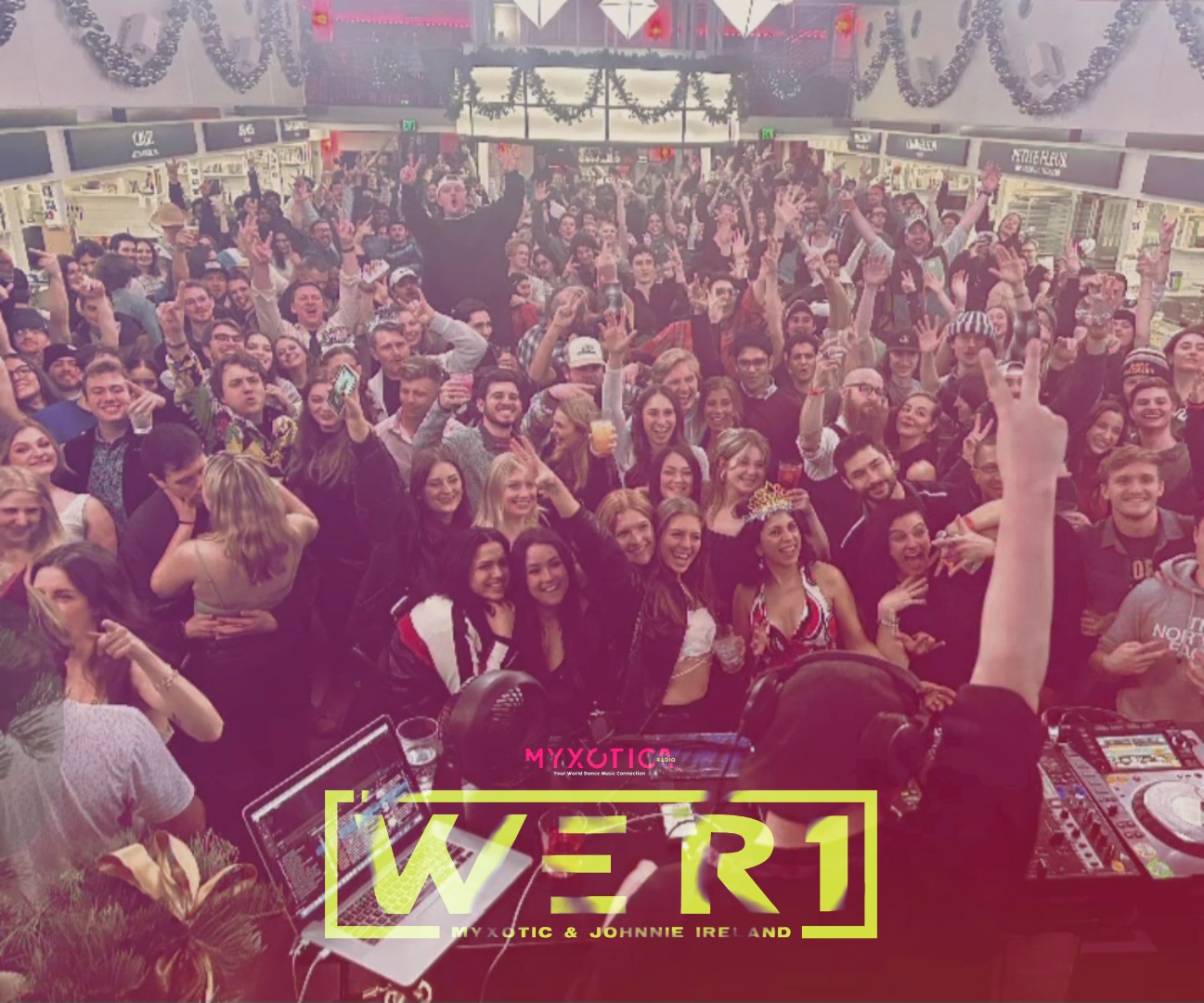
Image Credits
Jae Park, Ashley McKee