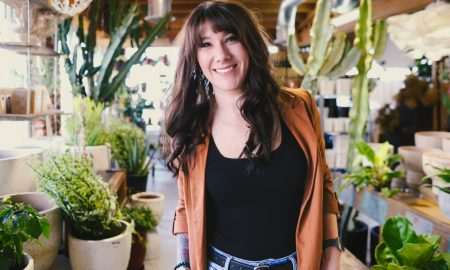


Today we’d like to introduce you to Psyche Cassandra Dunkhase.
Hi Psyche, so excited to have you on the platform. So before we get into questions about your work-life, maybe you can bring our readers up to speed on your story and how you got to where you are today?
I started playing cello in my public elementary school when I was nine years old. Though I do not come from a family of musicians, my parents always made sure to expose me to many different types of music, both by playing records at home as well as taking me to live performances. For that, I am forever grateful. From the first moment I heard the cello, I fell in love with its deep, resonant tones. I knew in my heart that I was a cellist. Although music played a very large role in my life growing up, when it came time to go off to college, I was pretty certain I wanted to be a scientist. I attended Wesleyan University in Connecticut for their esteemed physics and astronomy programs, all the while studying and playing cello. I eventually reached a point when it was clear I had to make some big decisions. I could not keep up the pace of a triple major! After much soul-searching, I embraced the reality that I could not possibly imagine music taking a backseat in my life. Thus, I concluded my time at Wesleyan with a Bachelor of Arts in Music and went on to get a Masters of Music in Cello Performance from the University of Colorado at Boulder. Like so many people, once I found myself in the beauty of the Rocky Mountains I simply never left. I now live with my wife at 9,200 feet in a beautiful permaculture home committed to increased environmental sustainability.
Throughout my formal education, I gave cello lessons to children in my communities. I loved exploring music and cello with these young musicians! I always felt that I learned as much from them as they did from me. I was not a Suzuki kid myself, as my family could not afford the Suzuki music program in my hometown, even with the partial scholarships available. Rather, I was introduced to the pedagogical method when I was in college. I took the initial training to become a Suzuki cello teacher when I was 22 years old and was immediately enthralled. Shinichi Suzuki wrote, “Teaching music is not my main purpose. I want to make good citizens. If children hear fine music from the day of their birth and learn to play it, they develop sensitivity, discipline and endurance. They get a beautiful heart.” This ideology resonated with me on a profound level. I have now taken all of the Suzuki cello trainings offered, and more. I am deeply committed to Dr. Suzuki’s vision of educating the children of the world “to become a little better as people, a little happier.”
Would you say it’s been a smooth road, and if not what are some of the biggest challenges you’ve faced along the way?
There are always ups and downs to any road traveled. However, my white (and other layers of) privilege combined with my attributes of grit, hard work, and a strong conviction for my passions have made my road fairly smooth. I have my North Star, so to say, in that I know what matters most in the work I do with young musicians.
Thanks for sharing that. So, maybe next you can tell us a bit more about your work?
I am a passionate cellist and cello teacher committed to providing unique musical experiences that cultivate self-expression, inspire innovation and spark imagination. I have the honor of working with around 35 students on a weekly basis, ranging in age from 4 years old to adults, in both individual and group lesson settings. I am on the cello faculty at Boulder Suzuki Strings, specializing in Suzuki method pedagogy, as well as the founder and Executive Director of a new 501(c)(3) organization, Cellists for Change. Dedicated to creating positive change in the world, Cellists for Change empowers young people through music. We nurture creativity, celebrate diversity, and foster inclusivity in music education and the arts through representation, equity in access, and meaningful community engagement. The mission and vision of this organization have long been present in my work with students.
However, in the summer of 2020, a confluence of factors led me to formally organize my endeavors to maximize our potential positive impact in our community. This has been such an incredibly turbulent year, from a devastating pandemic to an awakening of the atrocious systemic racism present in our nation to a horrifically polarizing election. Now more than ever we need to help our children stay strong, resilient, and confident that each of us is essential to building a future more equitable, connected, and filled with promise. Cellists for Change is committed to performing works from the rich canon of repertoire written by diverse composers traditionally underrepresented in the classical sphere, as well as commissioning new works that celebrate the voices and creativity of BIPOC, female, and LGBTQIA+ artists. My students and I had the privilege of working closely with Kari Clifton (Denver-based cellist and composer) and Sergio Marroquin (Guatemalan composer) to premiere two new works for cello ensemble over the past two years. This year, we are honored to have commissioned a new piece from QPoC composer Lee Knight and Jamaican-born poet André O. Hoilette that expresses the Black lived experiences in our communities.
The work challenges the nation to evaluate its dissociation between proclaiming Black Lives Matter and its actions and characterizations that clearly endanger and devalue Black lives. Keep an eye out for this new interdisciplinary piece, anticipated to premiere Summer 2021. My students and I also nurture a much-treasured friendship with Escuela de Cuerdas, a school of music in Huehuetenango, Guatemala. This relationship has allowed for valuable musical and cultural exchange between students here and students in Huehue, reaffirming our shared humanity and inspiring young musicians to make a positive impact on their global community. Cellists for Change has been able to fund four educational programs in villages throughout the Western Highlands of Guatemala that combine the sharing of music with the delivery of much needed food and other essential items. I am so excited to see this partnership blossom further in the upcoming years. Cellists for Change aspires to ensure all young people have access to learning, creating, and performing experiences that reflect their culture and identity. If you have a child or know of a child who would be empowered by the mission and vision of Cellists for Change, please reach out to me at cellistsforchange@gmail.com!
Are there any books, apps, podcasts or blogs that help you do your best?
Books: We Want To Do More Than Survive: Abolitionist Teaching and the Pursuit of Educational Freedom by Bettina L. Love Intelligent Music Teaching by Robert A. Duke The Entrepreneurial Artist by Aaron P. Dworkin Nurtured by Love by Shinichi Suzuki If I Had A Water Buffalo: Empowering Others Through Sustainable Lending by Marilyn A. Fitzgerald Blogs: blog.joangarry.com (nonprofit leadership)
Contact Info:
- Email: cellistsforchange@gmail.com; psyche.dunkhase@gmail.com
- Website: www.cellistsforchange.org (under construction–will go live in April); www.psychedunkhase.com
- Instagram: CellistsforChange
- Facebook: Cellists for Change


 Image Credits
Teressa Mattes, TKM Co. Lindsay Lidge
Popular
-

The Trailblazers: Rewriting the Narrative
-

Celebrating the Spotlight: Kaytee Shashore Turns Milestones Into Momentum
-

Humanity in the Machine: Alexander Raye Pimentel’s Cyborg Recall Questions the Cost of a Data‑Driven World
-

Raemi Anderson on Courage, Caution, and Answering the Call of the Landscape
-

Hidden Gems: Local Businesses & Creatives You Should Know