

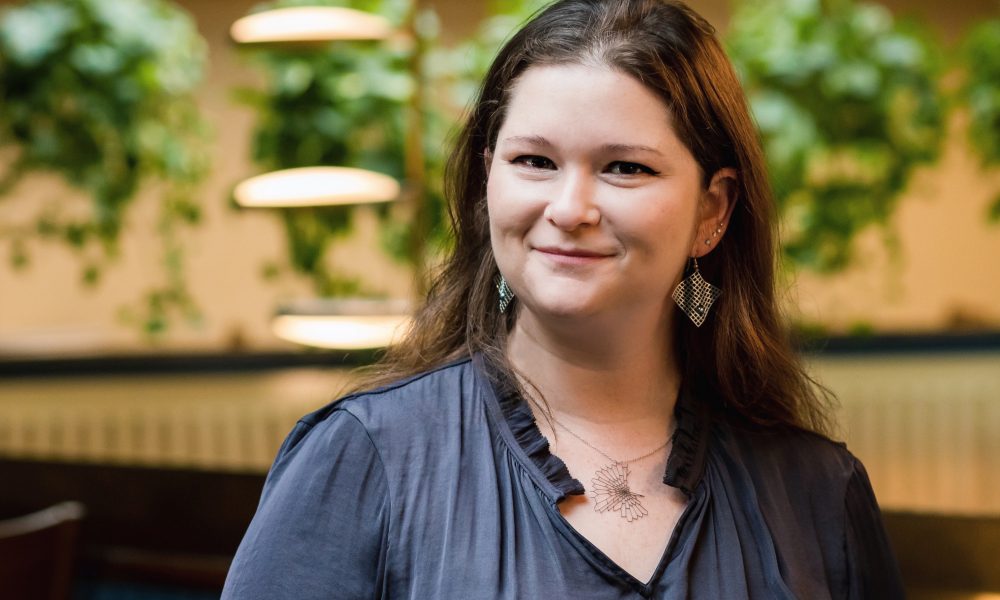
Today we’d like to introduce you to Cynthia Fishman.
Cynthia, let’s start with your story. We’d love to hear how you got started and how the journey has been so far.
I’m originally from New York and Connecticut, and went to Rice University in Houston, TX for my Bachelor of Architecture degree. While there, I attended off-campus lectures regarding sustainability and read every book about the sustainable design I could get a hold of, including Janine Beyus’s book, Biomimicry: Innovation Inspired by Nature. This was the first time I found an approach to sustainability that was interdisciplinary and collaborative. Even though the idea had been used by humans for thousands of years, Benyus was the first person to define the term and create a direction for this type of innovation.
I graduated during the recession and focused on finding a job while taking the exams to become a licensed architect. I worked on projects ranging from fire stations to single-family homes and from apartment complexes to forensic laboratories. It wasn’t until I attended a lecture in 2014 by Michael Pawlyn about biomimicry in architecture at the University of Colorado Denver College of Architecture and Planning (UCD) that I was reminded about the amazing practice of learning from nature from a functional perspective. From there, I was part of the first matriculating class at Arizona State University to earn a Master of Science in Biomimicry and also completed additional workshops to earn a Biomimicry Specialist (BSpec) accreditation.
In 2018, I started my own business, Biomimicry Design Alliance (BDA) that concentrates on four aspects of biomimicry: working with architects and clients to incorporate it into their designs, creating biomimetic products for the built environment, creating innovative tools, and education. Education comes in the form of speaking engagements at conferences, including AIA National’s 2019 Conference on Architecture in Las Vegas, giving presentations at design firms, and BDA’s social media presence. I also teach biomimicry as an adjunct professor at UCD and at the Ecosa Institute at Prescott College in Arizona.
We’re always bombarded by how great it is to pursue your passion, etc – but we’ve spoken with enough people to know that it’s not always easy. Overall, would you say things have been easy for you?
Being an early adaptor comes with many triumphs and struggles. The concept of biomimicry is not well known and often gets confused with other bio- words such as biophilia. Acting as a consultant is also dependent on budget, as many architecture projects do not have the financial resources to include innovative concepts without a proven track record. Biomimicry is based on 3.8billion years of research and development, completed by the 10 to 14million organisms on the planet, and we have yet to discover most of nature’s innovations and solutions since only about 14% of those organisms have been documented. However, since it is a new field, there aren’t many built examples.
Please tell us about Biomimicry Design Alliance.
“Biomimicry is a way of seeking sustainable solutions by borrowing life’s blueprints, chemical recipes, and ecosystem strategies. At its most transformative, it brings us into a balanced relationship with the rest of the natural world, as students learning to be a welcome species on this planet. For designers, architects, engineers, and innovators of all stripes, the answer to the question “What would nature do here?” is a revelation. There’s not one new idea, but millions of ideas evolved in context tested over eons, and proven to be safe for this generation and the next.” (excerpts from A Biomimicry Primer by Janine M. Benyus, Biomimicry 3.8)
The Biomimicry Design Alliance (BDA) includes architects, designers, scientists, and innovative technology solutions working together to create tools to help make biomimicry accessible to the architecture community. BDA consists of forward-thinking individuals and partner organizations. By forming alliances with Denver institutions such as the Denver Zoo, Denver Botanic Gardens, and the innovation initiative Inworks at the University of Colorado Denver as Collaborators, BDA expands its knowledge base and resources exponentially.
In 2019, BDA was a winner of the Global Biomimicry Design Challenge hosted by the Biomimicry Institute. The competition entry used inspiration from nature to help mitigate the effects of sunny-day flooding in coastal cities. These mentors included small intestines for their absorbtive qualities, lymph vessels for directing fluid passively, and mangrove tree roots for desalinazation and water collection. BDA is currently working on design competitions and applying for grants to help fund biomimetic research.
What were you like growing up?
I’ve known that the planet was in trouble since I was in second grade. I distinctly remember sitting outside at recess thinking about air pollution and wondering if I could design a machine that would attach to cars and smokestacks which would purify the air. I wanted to save the world. Ever since then I knew that my career would have something to do with cleaning up the planet to make it a better place for future generations. Even when the field I planned to study in undergrad changed—from chemistry to environmental engineering and finally to architecture—the environment and how people interacted with it was always central.
As a child, I loved both the arts and sciences, which made architecture a great career choice. I was also extremely entrepreneurial from babysitting to doing odd jobs around my neighborhood, like washing cars and weeding. In high school, I took as many AP classes as possible, was editor-in-chief of the yearbook, and adored all things from the 1960’s. The Beatles were (and still are) my favorite band and I even painted my Honda Civic in high school with flowers and ladybugs to be more like something from that era. People remember it as a VW bug, which happens to be my favorite car, so it worked for me!
Contact Info:
- Website: www.BiomimicryDesignAlliance.org
- Email: discover@biomimicrydesignalliance.org
- Instagram: https://www.instagram.com/biomimicry.design.alliance/
- Facebook: https://www.facebook.com/biomimicry.design.alliance/


Suggest a story: VoyageDenver is built on recommendations from the community; it’s how we uncover hidden gems, so if you or someone you know deserves recognition please let us know here.