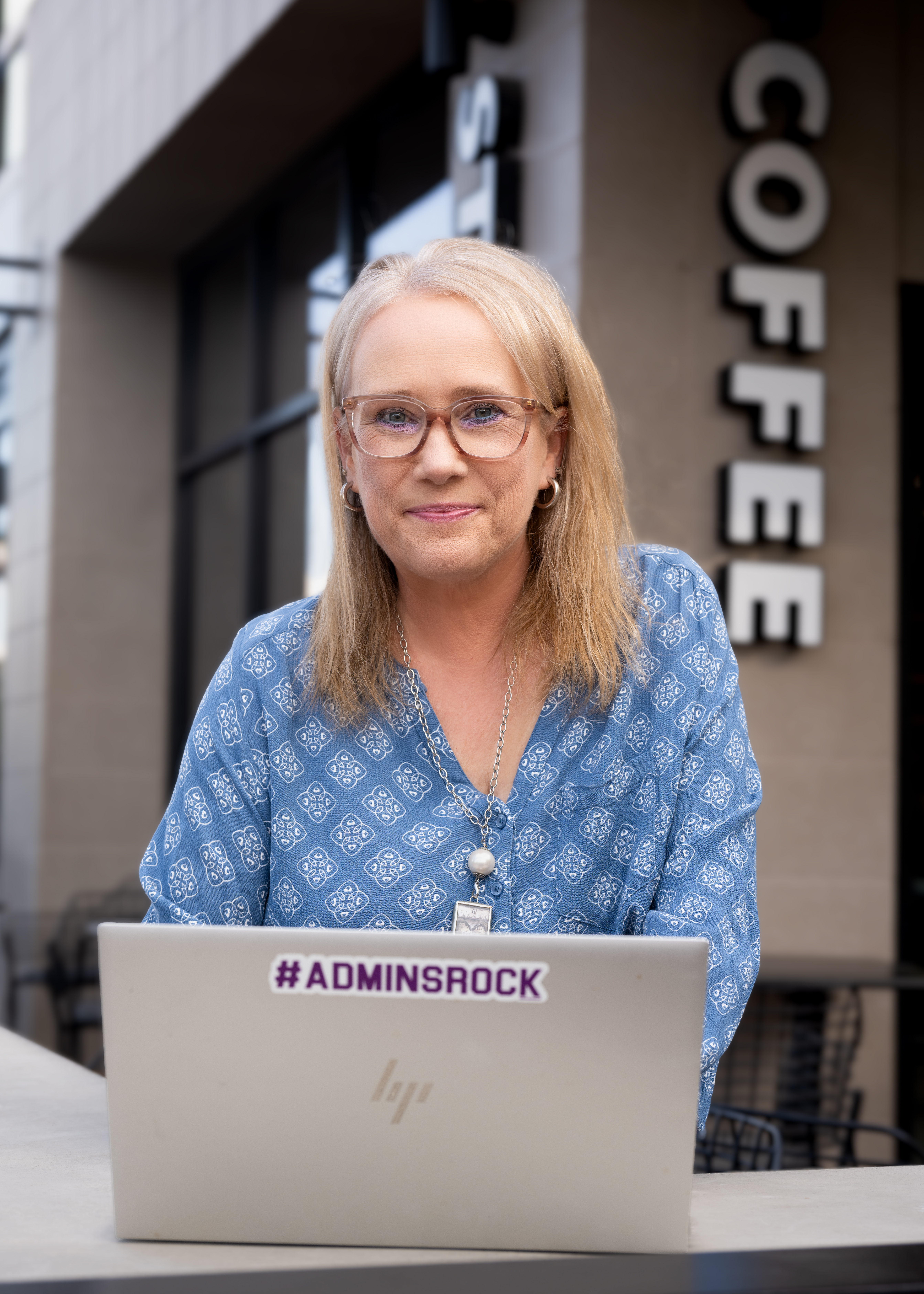
In this candid conversation, Bonnie Schutz, founder of Tandem Resource Solutions and host of Delegate2Elevate: Get Sh!t Done, shares how stepping out of a decades-long career as a corporate Executive Assistant and into entrepreneurship pushed her to claim her voice in a powerful second act, offering no-fluff insight into why delegation breaks down, how trust is built through clarity and systems, and why learning to let go isn’t about control—but about protecting energy, building capacity, and leading in a way that allows both businesses and humans to thrive.
Hi Bonnie, thank you so much for taking the time to share your story and insights with our readers. After decades as a corporate Executive Assistant, you stepped into entrepreneurship, founded Tandem Resource Solutions, and launched Delegate2Elevate: Get Sh!t Done as part of this new chapter. What sparked the decision to start the podcast and claim your voice as a host in this “second act” of your career?
I was inspired by a stranger who complimented my voice and fueled by the unwavering support of my incredible network, I decided to “just do it!” Despite my doubts about my likeability and whether anyone would be interested in “little old me,” I took a leap of faith, invested in myself, and launched my podcast. My genuine desire is to assist the people we support at TRS, my VA agency, by sharing the valuable insights and expertise my guests, primarily professional service providers, bring to the table. With decades of experience, I believe I can delve deep to identify the roadblocks I’ve encountered myself, helping fellow business owners, founders, and CEOs to delegate or outsource effectively. This not only helps them elevate their businesses but also provides them with the much-needed freedom to simply “be,” take a breath, and not shoulder it all alone.
Your show tackles delegation and outsourcing in a refreshingly candid, no-fluff way. From your experience, what are the most common mistakes business owners make when trying to delegate, and what simple shifts can make the biggest difference?
Business owners usually don’t struggle with delegation because they’re “bad at it.” They struggle because they try to delegate the way they wish their brain worked… instead of the way their business actually runs on a Tuesday at 4:47 PM. The most common delegation mistakes are: 1.) Delegating tasks, not outcomes, 2.) Waiting until you are underwater to hand things off, 3. Handing things off without context, 4.) Being vague to avoid sounding too picky, 5.) Choosing the wrong thing to delegate first, 6.) Delegating, but still holding onto the steering wheel, and 7.) No feedback loop.
If I had to boil it down, it’s three simple shifts: define what “done” looks like, keep everything in one clear home base, and set expectations upfront on timing, priority, and updates. Delegation isn’t a personality trait; it’s a leadership skill. When you do it well, you don’t just hand off tasks… you build capacity, protect your energy, and make room for the work that moves the business forward.
You’ve worked both behind the scenes as an EA and now as a CEO building and managing support teams. How has seeing both sides of the equation shaped the way you think about leadership, trust, and building systems that actually stick?
Working on both sides of the desk has taught me that support isn’t a “nice-to-have.” It’s a leadership strategy. As an EA, I could feel the difference between leaders who truly trusted me as their support and leaders who wanted my help but still held everything tightly. Now as a CEO, I get why. Letting go can feel risky when the stakes are high and your brain is running a million percent.
So, I lead with clarity as a form of respect. Over-communication is key. Trust gets built in the small moments … clear expectations, consistent follow-through, and making it safe to ask questions without getting side-eyed for it. My favorite phrase that I share often on the podcast is “Trust but verify.”
And systems that stick? They’re simple, lived-in, and designed for real life, not the perfect life. The best ones are really agreements about what “done” looks like, where things live, and how we communicate best/most effectively. That’s how you build a team that can run with you; not wait on you.
A lot of high-achieving leaders say they want help but still struggle to let go. What do you think is really underneath that resistance—control, fear, past bad experiences—and how can people move through it?
Most of the time, it’s not control. It’s self-protection. High-achievers have been the “save the day” person for so long that letting go feels like risking their reputation and results, especially if they’ve had a past handoff go sideways.
The way through isn’t to “trust harder.” It’s to create trust with structure: start with a low-risk handoff, define what “done” looks like, and set a quick check-in cadence so you’re not hovering or disappearing. Delegation is a skill you build in repetition, and each solid handoff becomes proof you can let go without things falling apart.
As the podcast continues to grow and become a relationship-builder and business driver for you, what’s been most surprising or meaningful about the conversations you’re having, and what do you hope listeners walk away with after each episode?
What’s surprised me most is how often the “success story” has a very human backstory behind it. Messy middles, hard lessons, and the kind of growth you don’t see on a highlight reel. The conversations have also reminded me that relationships are the real business currency. When people feel seen and understood, they lean in. That’s where the trust starts.
What I hope listeners walk away with after each episode is simple: one practical takeaway they can use immediately, and the feeling that they’re not the only one trying to lead, build, and still be a whole human at the same time. If they finish an episode thinking, “Okay, I can do this … and I can delegate the next right thing,” then I did my job.
Links:














 Andrew Leahan on Transforming Everyday Spaces Through Thoughtful Plant Design and Full-Service Greenery Solutions
 Refinement Over Reinvention: Ashley Gaffney on Building Brands That Feel as True as They Perform
 Modern Sacred: Chelsea Henderson and Abby Payne on Building Community Through Shared Healing and Collective Growth
 Cutting Through the Noise: How Audrey Kerchner Is Helping Businesses Beat AI Paralysis
 Deb Matlock on Reconnecting with the “More-Than-Human World” Through Deep Listening and Nature-Based Practice
 Designing Bold, Lived-In Spaces: How April Stites Is Blending Artistry and Function in Modern Home Design
 Shaping Strength and Stillness: Carlos Flores on Craft, Culture, and a Life Worth the Effort
 Healing, Identity & Letting Go: Sandra Artiles on Turning Pain into Purpose Through Para Siempre
 From Lullabies to Legacy: Kathy Taylor on Turning Love into a Lifelong Musical Scrapbook